PERSON DIRECTORY
Martin Casado
Martin Casado appears in 23 indexed conversations across The a16z Show, 20VC, Latent Space. This directory brings every appearance, source, TL;DR, digest, and transcript into one searchable feed.
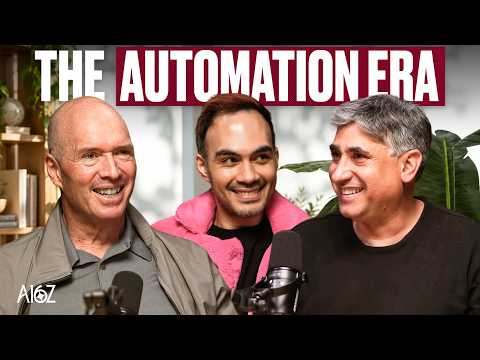
How Jev Turns AI Into Software That Gets Things Done
Ben HorowitzMartin CasadoDiogo Almeida
Jev targets AI’s missing software layer: a natural-language primitive that joins a state machine and selects actions with confidence, making software itself more capable rather than merely speeding code production.Its economic unlock is reliability—“the same intelligence every time”—which could let incumbent SaaS vendors automate high-return workflows across existing distribution, while state consistency, security, cost, speed, and strong guarantees remain unresolved.

Why AI’s Next Breakthroughs Could Come from Outside the Big Labs
Erik TorenbergAaron LevieMartin CasadoSteven Sinofsky
Agent swarms expose a security gap: controls built for trustworthy, capacity-constrained humans fail when software exhausts APIs and confuses good tasks with bad ones.That implies upgrades across identity, authorization, observability, operating systems, networks, and granular data permissions.Meanwhile, Jevons-style option selection could shift innovation beyond frontier labs by making models faster, cheaper, and more accurate interfaces for traditional software.

Why Would AI Companies Want to Slow Down?
Ali GhodsiMartin CasadoSarah Wang
Frontier AI’s immediate enterprise risk may be cyberattack acceleration: CVE-to-exploit time fell from 2–3 years in 2018–19 to “basically hours” now, while most organizations lack automated detection and threat hunting.Ghodsi says recursive self-improvement shows none of four required conditions; enterprises need context and cost control more than smarter models, though a frontier freeze would be disastrous to the labs.
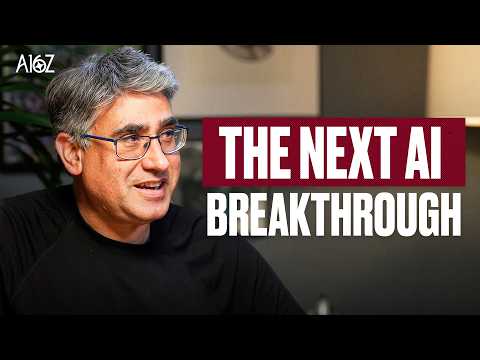
Why World Models Could Change Robotics, 3D, and Creativity
Fei-Fei LiJustin JohnsonBen MildenhallMartin Casado
World Labs’ Atlas introduces novel-view prediction as a foundation-model primitive, unifying 3D reconstruction and generation through camera-conditioned outputs.Three iPhone shots can replace 100–300 room photos, a claimed 50–100× capture reduction, while Atlas targets robotics’ data bottleneck.The open commercial test is industrial-grade editability and control without degrading quality; dynamics are claimed latent, but this remains a milestone beyond entertainment.
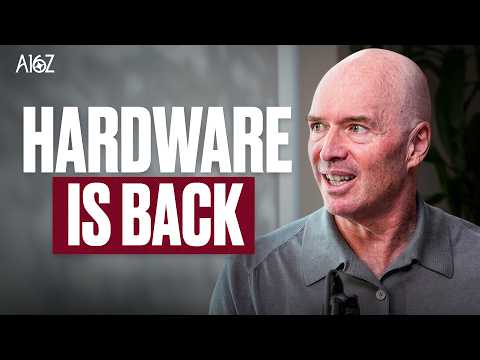
How AI Is Reinventing Computing from Chips to Power
Ben HorowitzMartin CasadoRaghu RaghuramErik Torenberg
a16z’s new AI infrastructure fund captures a founder migration into hardware, with top-founder hardware pitches rising from roughly 3–5% to “north of 20% or 30%.”Hyperscaler capex, booked-out GPUs and resale premiums support opportunities across chips, power and cooling, while grid shortages, regulation and uncontrolled agent spending remain constraints.

The Evolution of Computers with Martin Casado and Steven Sinofsky
Martin CasadoErik TorenbergSteven Sinofsky
AI is shifting the industry from engineering-bound to capital-bound, giving small teams and startups such as Cursor, Anthropic and OpenAI new leverage against incumbents.Token and GPU demand turn distribution into a spending decision, but mathematical advances do not establish market value or predictive power.Applications, clinical testing and larger training runs will test whether this is a durable abstraction shift.

Fei-Fei Li is Solving the Hardest Problem in Robotics | World Labs with a16z
Martin CasadoFei-Fei LiYunzhu Li
World Labs is extending its spatial-intelligence stack into robotics by bringing SpAItial inside rather than manufacturing robots.The combination pairs Marble’s geometrically consistent worlds with real-to-sim-to-real robotics expertise to address scarce data and slow, costly evaluation.Near-term traction depends on proving aligned simulation in structured factories, warehouses, hotels, and restaurants, while homes and human-level efficiency remain distant risks.

Aaron Levie on AI Adoption and Enterprise Workflows | The a16z Show
Steven SinofskyAaron LevieMartin Casado
Enterprise AI adoption is constrained less by model capability than by fragmented data, legacy systems, permissions and undocumented workflows, making coding agents the unusually easy case.Agents could create machine seats and expand software demand, but integration, security reviews, change management and operational entropy may sustain decades of implementation work while limiting near-term productivity gains.

Box CEO on the AI Adoption Gap | The a16z Show
Erik TorenbergSteven SinofskyMartin CasadoAaron Levie
Enterprise AI adoption depends less on model capability than on permissions, liability, identity, and operational control, making diffusion slower than Silicon Valley expects.Agents could multiply software demand by 100 or 1,000 times, while systems of record remain defensible and token costs create an immediate earnings and pricing challenge.

a16z's Casado & Wang on Bitter Lessons in Venture vs Growth
Alessio FanelliswyxMartin CasadoSarah Wang
Frontier AI financing has become a venture-growth hybrid, combining compute contracts, equity, strategic capital, and go-to-market support within months of formation.The bull case depends on dollars producing capability, capability creating demand, and demand funding larger rounds that could let model owners outspend downstream applications.The unresolved risk is whether scaling laws and customer demand persist, or whether capital rationalization and cheaper compute break the flywheel.