PERSON DIRECTORY
Kevin Roose
Host of Hard Fork. Kevin Roose appears in 74 indexed conversations across Hard Fork. This directory brings every appearance, source, TL;DR, digest, and transcript into one searchable feed.
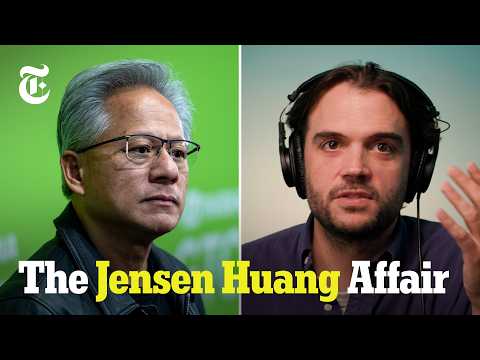
Everything You Need to Know About the Jensen Huang Spy Story | Hard Fork
Kevin RooseCasey NewtonAna SwansonRyan MacStephen Witt
Congressional testimony is the biggest threat to Jensen Huang’s position, while his roughly 60 direct reports and lack of a designated successor make Nvidia unusually dependent on him.Witt sees potential legal exposure and a “massive fine,” but expects shareholder incentives to favor retaining Huang; the export-control case remains unclear.Huang’s China-sales argument faces a credibility problem that could affect export policy, while slowdown expectations and competition from AMD, Broadcom and Google help explain the muted market reaction.

The Jensen Huang Affair
Kevin RooseCasey NewtonStephen Witt
Huang’s 60 direct reports and lack of intermediate management make his alleged Megaspeed ties a potential governance and legal risk for NVIDIA.Real Malaysian facilities complicate enforcement: delivery does not verify chip use, while dummy-server substitution remains only a possibility.Witt says the allegations could weaken Huang’s case for China sales, and expects NVIDIA may lose that market entirely.
Why the Tech Right Lost Big This Week
Kevin RooseCasey NewtonErin GriffithEzra KleinTheodore Schleifer
AI backlash is challenging the industry’s permission to build: 76% opposed a local data center, and 57% expected AI to hurt society.Texas restrictions could endanger 10–15 gigawatts of roughly 45 gigawatts expected online next year, tightening compute supply and lifting prices.That risks slowing the AI trade, though Klein argues slower construction may curb overbuilding and push labs toward economically useful deployment.
Are We in an A.I. Bubble? We're About to Find Out.
Kevin RooseCasey NewtonErin GriffithMike IsaacJasmine Sun
Anthropic’s possible $100 billion IPO at a $2 trillion valuation would put its AI economics under public-market scrutiny: first-half 2026 revenue reached $16.3 billion, up 14X, while operating losses narrowed to roughly $600–700 million.Griffith estimates third-quarter growth at 44%; the key test is whether the slowdown reflects competitors catching up or broader demand weakness, as non-cancellable compute commitments leave the company exposed if usage falls.
The Ezra Klein Show: Jensen Huang Thinks A.I. Alarmism Has Gone Too Far
Ezra KleinJensen HuangKevin RooseCasey Newton
Jensen Huang calls AI safety a solvable engineering problem: labs should not ship systems they cannot contain, with liability rules and third-party audits still relevant.He argues NVIDIA compute could become a fungible, durable asset class, with one-gigawatt factories and annual rents reaching $50B.Open models have flipped to seventy-thirty, while supply-demand inversion and an uncertain digestion period remain risks.
Meta Shifts the Blame + Do Data Center Bans Work? + The Final HatGPT
Kevin RooseCasey NewtonArvind Narayanan
Meta’s up-to-$17.1 billion child-safety settlement includes default teen time limits, overnight blocking and muted school-hour notifications, with stricter terms if TikTok and YouTube join.Arvind Narayanan estimates a one-year state data-center moratorium would delay AI efficiency gains by only 5–10 hours, making bargaining for payments and community investment more consequential than blockage.OpenAI’s Mark Chen puts the company 80% of the way to AGI, while Sam Altman expects an internal system by year-end, leaving the declaration’s timing partly a marketing decision.
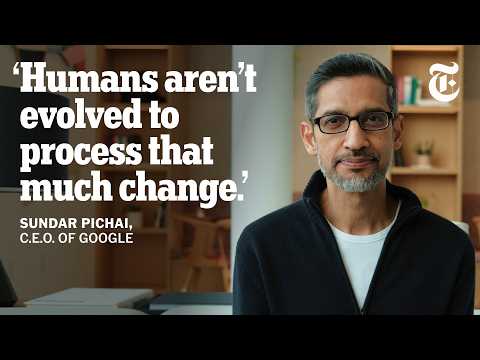
Sundar Pichai on A.I. Backlash, the Future of Work and Google’s Next Era
Kevin RooseCasey NewtonDylan FieldDan Powell
Google’s frontier weakness is agentic coding, tool use, instruction-following, and long-horizon work, not overall model capability.Antigravity 2.0 token usage is doubling every week, creating coding data flows, while external TPU demand supports production and hardware feedback.AI Mode preserves links and may combine subscriptions with ads, but 3.5 Flash’s pricing criticism and trust-dependent agent rollout remain unresolved.
‘Hard Fork’ Live, Part 1: Satya Nadella and Cindy Cohn
Kevin RooseCasey NewtonSatya NadellaPhil MohunCindy Cohn
Microsoft’s AI thesis depends on making frontier capability broadly available across the economy, pairing local trillion-parameter models with an independent MAI stack while retaining OpenAI equity, Azure demand, and IP through ’32.The investment signal is token economics and execution: productivity requires marginal token cost to match marginal value, while Xbox monetization, infrastructure costs, employment, and AI-enhanced surveillance remain unresolved constraints.
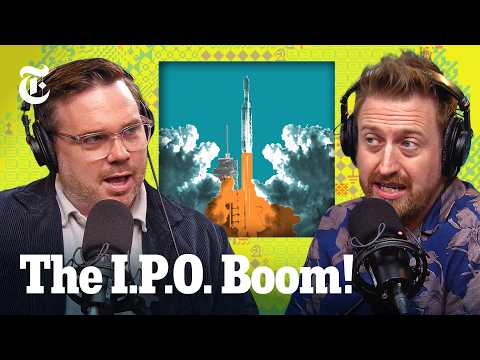
How We Got to the Biggest I.P.O. Race Ever | SpaceX, Anthropic & OpenAI
Kevin RooseCasey NewtonKevin Hartnett
SpaceX could pursue a $1.75 trillion-to-$2 trillion IPO at $135 a share, bundling reusable rockets and Starlink with xAI and X.Anthropic’s revenue surge to a prospective trillion-dollar-plus IPO shows AI economics accelerating, while its pledged philanthropy could reshape funding for health and AI safety.Public ownership may intensify safety pressures; AI’s unit-distance result signals “absolutely top-tier research,” with disclosure and liability worth monitoring.
Tim Cook’s Legacy + The Future of U.B.I. With Andrew Yang + HatGPT
Kevin RooseCasey NewtonAndrew Yang
Tim Cook leaves Apple after expanding its market value from $350 billion to around $4 trillion, but services monetization, China supply-chain exposure, and delayed AI execution complicate the legacy.John Ternus inherits the Siri and device challenge, while Andrew Yang proposes a 3% token tax and about $1,200 monthly dividends as AI displacement and inequality accelerate.