PERSON DIRECTORY
Jordan Nanos
Jordan Nanos appears in 45 indexed conversations across SemiAnalysis, Big Technology. This directory brings every appearance, source, TL;DR, digest, and transcript into one searchable feed.
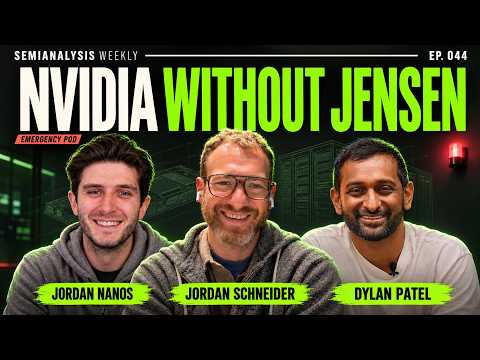
Ep. 044 - Is NVIDIA Over? EMERGENCY Pod with ChinaTalk | Dylan Patel, Jordan Nanos, Jordan Schneider
Jordan NanosDylan PatelJordan Schneider
NVIDIA’s leadership shock has turned alleged chip diversion into an export enforcement crisis, though evidence that Jensen Huang knew remains circumstantial.Patel says U.S.-controlled GPU rentals could preserve a remote cutoff over Chinese compute while earning providers millions per megawatt; Schneider questions whether U.S. frontier labs would gain more value from scarce capacity.The panel supports MATCH restrictions to constrain China’s chipmaking scale, while NVIDIA’s outlook depends on executive retention and Rubin roadmap execution.
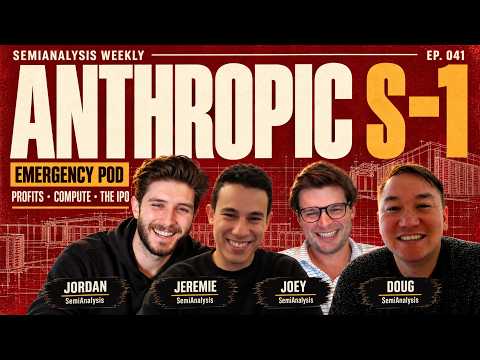
Ep. 041 - EMERGENCY: Inside the Anthropic’s S-1 (Tokenomics/ Markets)
Jordan NanosDoug O'LaughlinJeremie Eliahou OntiverosJoey Brookhart
S-1 disclosures of two profitable quarters, margins above 10%, 85% inference gross margins and 41% compute margins challenge the subsidy thesis.Joey cites ninefold existing-customer spending growth; Jeremie says prospective resources above $200 billion frame $500–600 billion of compute commitments.Whether revenue can monetize 2027 capacity remains unresolved, alongside 25% revenue concentration among the top five customers.
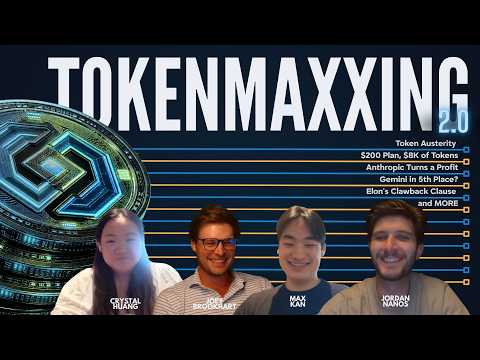
Ep. 020 - Anthropic vs OpenAI Usage, Margins, Meta Compute, Future of MSL (Tokenomics)
CrystalMax KanJoey BrookhartJordan Nanos
Anthropic’s enterprise/API mix is producing operating leverage: over 80% of ARR is API-based, Q2 operating profit was positive, and Q3 could exceed $1 billion.OpenAI’s free-user base weighs on margins, but 5.5 and 5.6 have reportedly restored a two-horse race, while subsidized coding plans and RL environments leave unit economics and capability scaling unresolved.