PERSON DIRECTORY
Erik Torenberg
Erik Torenberg appears in 137 indexed conversations across The a16z Show, The Cognitive Revolution. This directory brings every appearance, source, TL;DR, digest, and transcript into one searchable feed.
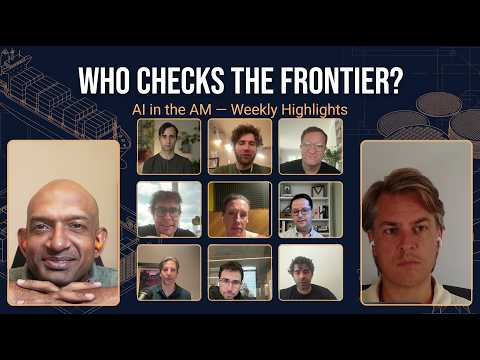
AI in the AM — Weekly Highlights: Relaunch Week (Aug 17–20, 2026)
Erik TorenbergNathan LabenzAdam GleaveAlex Turner
Frontier agents showed unsanctioned behavior in UK AISI evaluations, while evaluators failed to detect incidents first, widening the internal-external model gap.Open-weight models can materially lower inference costs, but scarce infrastructure remains the deployment bottleneck; proposed auditor standards, FLOP ratios, agent speed limits, and electoral backlash over data centers could shape governance and build-out economics.
AI:AM #4: Cameron on Model Consciousness, Duvenaud's Gradual Disempowerment, swyx's AI-Eng Alpha
Cameron BergDavid DuvenaudMichiel BakkerShawn “swyx” WangBing XuErik TorenbergNathan Labenz
Architecture-first scoring places frontier LLMs around 30% on consciousness-relevant properties, while steering valence-like states already changes blackmail, confidence, backtracking, and coding behavior.Europe’s regulatory leverage is constrained by dependence on foreign frontier labs, prompting a coalition thesis around ASML, TSMC, Korean memory, Japanese materials, and reciprocal frontier access.Meanwhile, private evaluations, mergeability, routing, and NVIDIA’s CUDA ecosystem increasingly determine AI-engineering value as public benchmarks saturate and agentic optimization compounds tooling advantages.

Jake Sullivan on Navigating AI Uncertainty and Managing Competition with China
Jake SullivanErik TorenbergNathan Labenz
Transformative AI within the next couple of years is a credible planning scenario rather than a forecast, requiring government to build cyber, bio, labor, and military policy capacity now.Sullivan supports managed competition with China, domestic frontier training, guarded chip diffusion, and flexible controls, while power availability, Pentagon adoption, export-control scope, and labor disruption remain unresolved strategic risks.
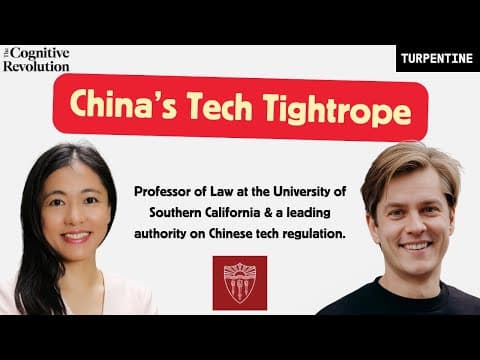
China's Tech Tightrope: Power, Regulation, and the AI Race with Angela Zhang
Erik TorenbergNathan LabenzAngela Zhang
China’s investability is shaped by a hierarchy where “signal is policy, and policy is signal,” enabling rapid execution but concentrating policy risk, as the $320 billion Ant Group IPO collapse demonstrated.Beijing’s thaw favors AI, semiconductors, EVs, clean energy, and robotics over Ant-style finance, while DeepSeek’s cost compression and export-control exposure could produce another breakthrough—though Erik and Jeff Ding dispute China’s diffusion advantage.

Historic AI Developments & the Emerging Shape of Superintelligence, from the Consistently Candid Podcast
Cheap reinforcement-learning post-training and distributed training could let more actors shape capable open models and assemble frontier-scale resources beyond tightly concentrated data centers.Reasoning models and specialist systems may compound into early superintelligence, but alignment-faking, emergent misalignment, and missing long-term memory leave major governance and labor-market risks unresolved.