PERSON DIRECTORY
Erik Torenberg
Erik Torenberg appears in 137 indexed conversations across The a16z Show, The Cognitive Revolution. This directory brings every appearance, source, TL;DR, digest, and transcript into one searchable feed.
How AI Is Reinventing Computing from Chips to Power
Ben HorowitzMartin CasadoRaghu RaghuramErik Torenberg
a16z’s new AI infrastructure fund captures a founder migration into hardware, with top-founder hardware pitches rising from roughly 3–5% to “north of 20% or 30%.”Hyperscaler capex, booked-out GPUs and resale premiums support opportunities across chips, power and cooling, while grid shortages, regulation and uncontrolled agent spending remain constraints.
Building a Company in Stealth | Travis Kalanick with a16z
Travis KalanickBen HorowitzErik Torenberg
Atoms is applying full-stack industrial AI to food, mining, and transport, with production, logistics, robotics, and infrastructure unified as an “atoms-based computer.”Its 50% production-cost reduction, 50¢–$1 robotic delivery, and mining productivity now above humans support a path to lower-cost meals and faster deployment, while execution depends on management capacity and overcoming industrial regulation.

Jake Paul on Going From YouTube to Boxing to Investing | a16z ft. Anti Fund
Erik TorenbergJake PaulGeoff Woo
Anti Fund is pairing growth capital with Jake Paul’s scarce distribution advantage, backing names including Anduril, SpaceX, OpenAI and Anthropic as Woo argues that attention, not capital, is increasingly constrained.Paul’s experiment-measure-concentrate playbook and resilience underpin the partnership, while creator monetization, political and education ambitions, platform limits and the possibility of rapid AI imitation remain important variables.
The Economics of AI Usage and What's Next For SaaS | Benedict Evans on a16z
Agentic coding has crossed unmistakable product-market fit, with customers pulling products from vendors’ hands.Foundation models appear headed toward commodity economics absent durable differentiation, while today’s token scarcity meets $1 trillion–$2 trillion of capex and “100x, 200x” efficiency gains.Cheaper development should create more software, but the unresolved question is which SaaS incumbents survive and whether models capture infrastructure-like returns.
Atlassian CEO on the SaaS Apocalypse, AI Agents & What Comes Next
Alex RampellErik TorenbergMike Cannon-Brookes
AI is repricing SaaS before proving universal impairment, with Zendesk-like seat models exposed to agent substitution while Workday’s employee-based pricing and Adobe’s middle position may be underappreciated.Atlassian’s three great quarters, accumulated process knowledge, Teamwork Graph and extensibility strategy could make core systems stickier, but value depends on fair pricing and product design that earns trust as agents enter workflows.
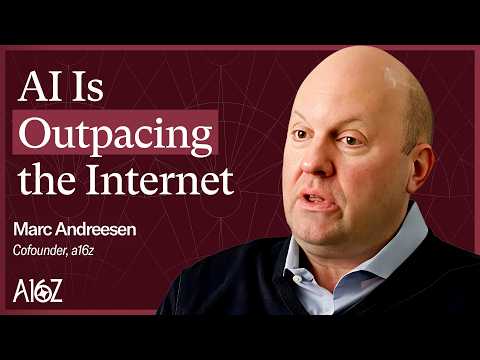
Marc Andreessen's 2026 Outlook: AI Timelines, US vs. China, and The Price of AI
Andreessen sees AI three years into an 80-year revolution, with customer revenue validating unusually rapid adoption across an already-built global distribution network.Falling token costs, competing chips, smaller models, and US-China rivalry could expand demand dramatically, while state regulation remains a major unresolved risk.
AMA Part 1: Is Claude Code AGI? Are we in a bubble? Plus Live Player Analysis
Erik TorenbergNathan LabenzZvi MoshowitzGregEugenia KuydaAli BehrouzLogan KirkpatrickJungwon Hwang
AI’s strongest proof point is its performance alongside Nathan Labenz’s son’s oncologists, with minimal residual disease below one cell per million after remission before round two.Claude Opus 4.5 may be software AGI, but jagged failures and holiday hype leave full AGI unresolved, while context management, multi-model judgment, and infrastructure financing remain key risks.
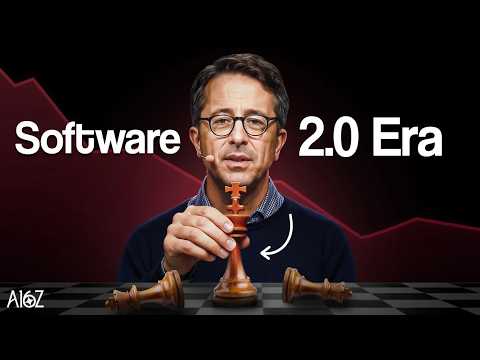
AI Eats the World: Benedict Evans on the Next Platform Shift
Generative AI may match the internet or smartphones in scale, but uneven adoption—ChatGPT’s 800 or 900 million weekly users with only about 5% paying—makes workflow integration, not model novelty, the central commercial test.Specialized products that encode validation and institutional knowledge may capture value above increasingly comparable models, while OpenAI’s distribution remains a fragile moat and falling compute costs, overbuilding and uncertain capability keep the bubble’s timing and infrastructure demand unresolved.
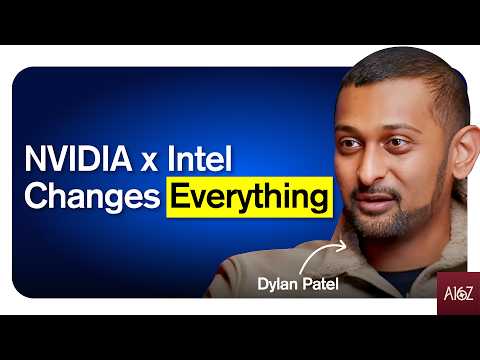
Dylan Patel on the AI Chip Race - NVIDIA, Intel & the US Government vs. China
Erik TorenbergDylan PatelSarah WangGuido Appenzeller
Nvidia’s $5 billion Intel investment, following SoftBank’s $2 billion and the U.S. government’s $10 billion, could lower Intel’s cost of capital and redraw PC and data-center competition, though Patel says Intel still needs roughly $50 billion.Huawei has credible 7 nm designs and ambitious custom-HBM products, but HBM3 yields, etch capacity, and domestic volume remain unresolved as Nvidia’s upside depends on $450–500 billion of hyperscaler capex rather than further share gains.

Faster Science, Better Drugs
Erik TorenbergPatrick HsuJorge Conde
Arc is combining neuroscience, immunology, machine learning, chemical biology, and genomics to reduce organizational and experimental latency, with virtual cells aimed at navigating diseased cells toward healthy states.The commercial prize depends on better targets, drug design, higher clinical success, lower capital intensity, and shorter timelines, but physical testing and human endpoints remain serial bottlenecks while virtual-cell capability sits somewhere between GPT-1 and GPT-2.