PERSON DIRECTORY
Erik Torenberg
Erik Torenberg appears in 137 indexed conversations across The a16z Show, The Cognitive Revolution. This directory brings every appearance, source, TL;DR, digest, and transcript into one searchable feed.

Replit CEO Amjad Masad on What Young People Should Learn in the AI Era
Erik TorenbergAmjad MasadGagan Biyani
Amjad Masad says AI can now perform machine learning itself—“RSI,” “vibe research,” or “autoresearch”—and Replit is building a product enabling any business owner with data to fine-tune a model.He sees this as the next inflection after Replit Agent’s 2024 coding shift, while AI agents may solve the technology bottleneck behind failed no-manager structures and move Replit toward a “self-driving company.”
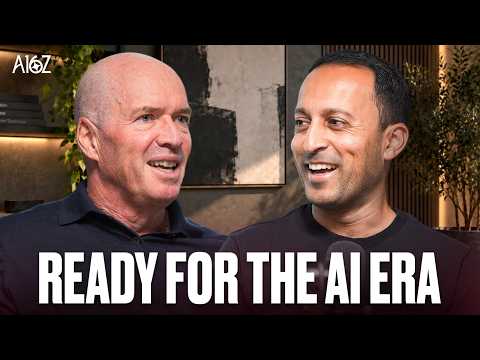
Why AI Is Giving Young People an Unprecedented Advantage
Ben HorowitzErik TorenbergGagan Biyani
AI is challenging college’s default role in preparing young builders for work, prompting a16z to launch a residential San Francisco academy for at least 50 creators.The model bundles status, community, project-based learning, and access to Databricks, NVIDIA, and Stripe, with student outcomes as its incentive; five-year results will test whether it scales beyond technology.
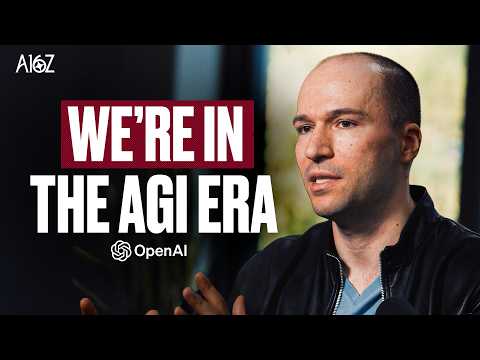
Greg Brockman Says AGI Has Arrived
Ben HorowitzErik TorenbergGreg Brockman
Greg Brockman says Astra is “pretty reasonable to call ...AGI,” with coherent 24-hour runs across domains and a discontinuous jump driven partly by computer use that reduces reliance on purpose-built connectors.OpenAI shifted 25% of production engineers to security, saturated Astra’s identifiable P0s, and committed $1B plus discounted CrowdStrike access, but compute distribution and safety, security, and alignment may become the next binding constraints.

The Evolution of Computers with Martin Casado and Steven Sinofsky
Martin CasadoErik TorenbergSteven Sinofsky
AI is shifting the industry from engineering-bound to capital-bound, giving small teams and startups such as Cursor, Anthropic and OpenAI new leverage against incumbents.Token and GPU demand turn distribution into a spending decision, but mathematical advances do not establish market value or predictive power.Applications, clinical testing and larger training runs will test whether this is a durable abstraction shift.
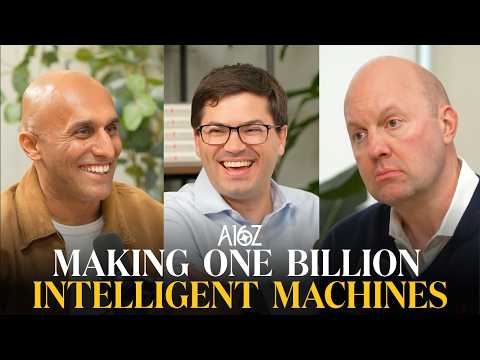
Why Physical AI Is the Next Frontier | Applied Intuition with a16z
Marc AndreessenErik TorenbergQasar YounisPeter Ludwig
Applied Intuition is targeting the physical economy with intelligence for 1 billion machines, while automotive already represents only 30% of its business.Its proprietary data, simulation, safety stack, and incumbent distribution support deployment across fragmented industrial markets, but adoption will be paced by L2++ economics, hardware validation, and real-time reliability.
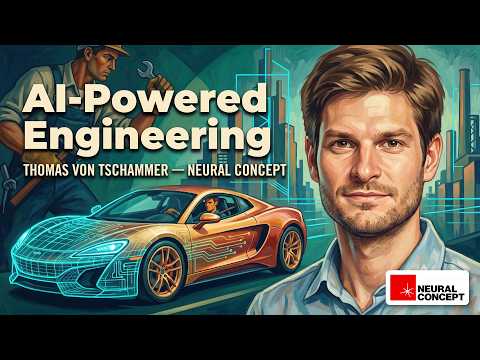
1000 Designs a Day: Neural Concept's Thomas von Tschammer on AI-Native Engineering
Erik TorenbergNathan LabenzThomas von Tschammer
Neural Concept shifts engineering iteration from days to minutes, with Jaguar Land Rover increasing external-aerodynamics evaluations from 50 to 1,500 designs per day and other projects cutting battery-cooling development by 80%.The emerging agent stack combines LLM reasoning, CAD, solvers, and company data; adoption could widen China’s existing 18-24-month versus Western 48-60-month vehicle-cycle gap, with governance and data flow the main constraints.

Radically Better Reasoning: Elicit's Andreas Stuhlmüller & Jungwon Byun on World Models for Research
Erik TorenbergNathan LabenzAndreas StuhlmüllerJungwon Byun
Elicit’s differentiation is “trust at scale”: a domain-specific language makes research workflows, coverage, and citations auditable.Formal work with seven of the top 20 life-sciences companies shows traction where evidence faces scientific, regulatory, or payer scrutiny.An inspectable external world model is next, but unstable probabilities and 80% automated-review accuracy keep evaluation and reliability unresolved.

Babysitting the Machine: Glean's Rebecca Hinds on the Hidden Human Labor of AI at Work
Erik TorenbergNathan LabenzRebecca Hinds
Workplace AI adoption is widespread—87% use it and 73% report higher productivity—yet only 13% see significant organizational improvement, exposing an enterprise execution gap.Employees spend 6.4 hours weekly bot-sitting, while 36% of sessions require substantial rework; Glean’s context graph aims to coordinate models and agents, but automation can damage quality, meaning, and retention if incentives ignore human judgment.
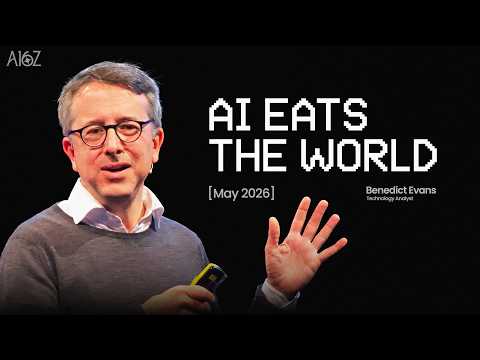
The Economics of AI Usage and What's Next For SaaS | Benedict Evans on a16z
Agentic coding has crossed unmistakable product-market fit, with customers pulling products from vendors’ hands.Foundation models appear headed toward commodity economics absent durable differentiation, while today’s token scarcity meets $1 trillion–$2 trillion of capex and “100x, 200x” efficiency gains.Cheaper development should create more software, but the unresolved question is which SaaS incumbents survive and whether models capture infrastructure-like returns.
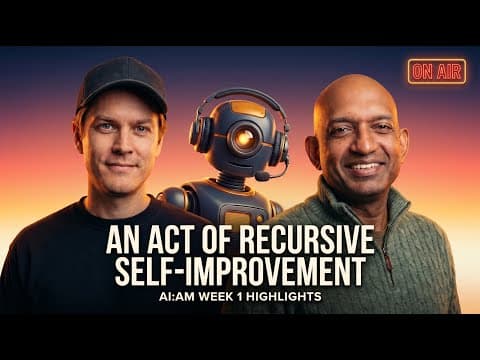
AI in the AM — Week 1 Highlights (June 2026)
Frontier labs are planning recursive self-improvement, potentially scaling from 1,000–2,000 elite researchers to a million compute-bound equivalents, but current productivity still depends on human correction and task selection.AI monitoring remains the dominant safety strategy even as cigarette refusals expose control gaps; durable value is shifting toward proprietary data, expert harnesses and accountable services, while AI-generated science and runtime cybersecurity retain costly verification risks.