PERSON DIRECTORY
Anjney Midha
Anjney Midha appears in 11 indexed conversations across The a16z Show, Latent Space, The Cognitive Revolution. This directory brings every appearance, source, TL;DR, digest, and transcript into one searchable feed.

The $10 Trillion Token Economy — Alex Atallah, OpenRouter & Anjney Midha, AMP
Stripe–OpenRouter reframes the token economy as a security market, with token flows projected at roughly $5 trillion in five years and $10 trillion over ten.OpenRouter’s moat spans over 10 million developers and roughly 10 trillion tokens daily, while frontier labs struggle to turn checkpoints into revenue.Fraud could drive discrete-task pricing and bring-your-own-inference, while the deal accelerates OpenRouter’s roadmap.
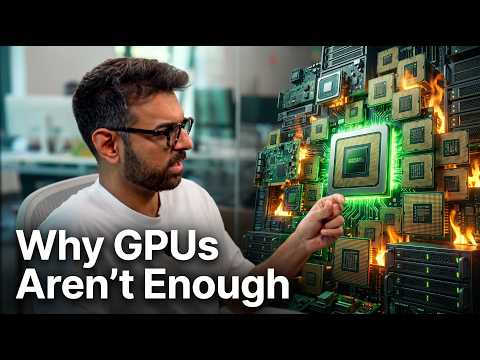
Why AI Labs With Unlimited GPUs Still Fail — Anjney Midha, AMP
AI infrastructure’s binding constraint may be aligned execution rather than money or compute: best-in-class MFU is 60–70%, while small planning errors compound across organizational layers.Amp’s neutral, multi-cloud, multi-silicon grid targets 1.3 gigawatts of demand—roughly $40 billion of cloud spend—against teams that may need 6 gigawatts of spikes over four years, but community support, trust, and culture remain unresolved execution risks.
Periodic Labs: Training AI Scientists, with Liam Fedus & Ekin Dogus Cubuk (from a16z)
Anjney MidhaLiam FedusEkin Dogus Cubuk
Periodic Labs’ $300 million seed, led by Andreessen Horowitz, backs an AI-scientist thesis where nature supplies the final reward through automated experiments rather than internet-scale training.Scaling may continue while noisy data and missing negative results slow out-of-domain discovery; the about 135 Kelvin superconductivity benchmark provides a measurable north star, while copilots for advanced industries offer a nearer-term land-and-expand business.
Building an AI Physicist: ChatGPT Co-Creator’s Next Venture
Anjney MidhaLiam FedusEkin Dogus Cubuk
Periodic Labs is betting that “Nature is our RL environment,” using experiments to supply the ground truth and reward signals that internet-trained models lack for physics and chemistry.High-temperature superconductivity offers a falsifiable benchmark, while an intelligence layer for industrial R&D could commercialize the stack through scoped deployments, mid-training, simulation, autonomous synthesis, and experimental iteration.
From Vibe Coding to Vibe Researching: OpenAI’s Mark Chen and Jakub Pachocki
Mark ChenJakub PachockiAnjney MidhaSarah Wang
GPT-5 makes adaptive reasoning and agentic behavior the default, shifting competition toward thinking budgets, latency, reliability, and economically relevant discovery rather than saturated benchmarks.OpenAI’s automated-researcher ambition requires longer planning, persistent memory, and honest recovery from failure, while scarce compute, energy, and robotics capacity remain constraints worth monitoring.
The Current Reality of American AI Policy: From ‘Pause AI’ to ‘Build’
Martin CasadoAnjney MidhaErik Torenberg
US AI policy has shifted from “PauseAI” toward building American leadership, with open weights, an evaluations ecosystem and sovereign AI markets replacing broad restrictions as the central commercial framework.SB 1047’s downstream liability risk and DeepSeek’s frontier proximity exposed the chilling cost of theoretical safety claims, while the action plan’s weak execution detail and omission of academia remain unresolved constraints.