PERSON DIRECTORY
Alessio Fanelli
Host of Latent Space. Alessio Fanelli appears in 22 indexed conversations across Latent Space. This directory brings every appearance, source, TL;DR, digest, and transcript into one searchable feed.
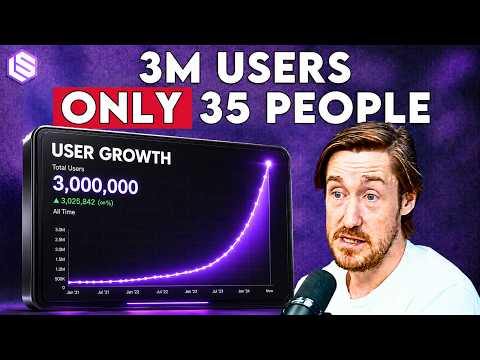
The Agent-Native Cloud: 3M Users, 100K Signups/Wk, Data Centers, & Death PRs — Jake Cooper, Railway
Alessio FanelliswyxJake Cooper
Railway is betting agents will dominate software building, using bare metal and a versioned, forkable application layer to turn deployment into continuous, reversible evolution.Hardware reportedly pays back in about three months with roughly 70% margins, but CI/CD may melt under parallel workloads; autonomous remediation, eventual GPUs, and disciplined capacity financing remain key watchpoints.
The $15B Physical AI Company: Simulation, Autonomy OS, Neural Sim, & 1K Engineers—Applied Intuition
Alessio FanelliswyxQasar YounisPeter Ludwig
Applied Intuition is building a horizontal physical-AI stack spanning simulation, operating systems and autonomy, with 18 of the top 20 non-Chinese global automakers cited as customers.Its opportunity depends on consolidating fragmented machine software and proving statistical safety under strict latency, power and reliability constraints, while production deployment and capital endurance remain key risks.
Notion's Token Town: MCP vs CLIs and the Software Factory Future
Alessio FanelliswyxSarah SachsSimon Last
Notion’s Custom Agents delivered its strongest launch yet for free trials and conversion, but only after four or five rebuilds dating to late 2022.That system-of-record position, reinforced by evals and permissions, could gain importance as agents drive most traffic, but usage credits must contain costs such as “Opus on every single database cell.”

Marc Andreessen introspects on Death of the Browser, Pi + OpenClaw, and Why "This Time Is Different"
Marc AndreessenswyxAlessio Fanelli
Andreessen argues AI has crossed from fluent generation into consequential reasoning, coding, agents, and recursive self-improvement, making the technical progress real despite possible boom-bust cycles.GPU overbuild remains a dot-com-style risk, but strong balance sheets, sold-out supply through the next three to four years, and software-driven chip value make betting against infrastructure dangerous while security, consolidation, and adoption remain unresolved.

Anthropic’s Felix Rieseberg on AI Coworkers, Local-First Agents, and the Future of Knowledge Work
Alessio FanelliswyxFelix Rieseberg
Claude Cowork places Claude Code inside a guarded Linux virtual machine, combining computer access, browser tools, planning, and reusable skills to turn knowledge-work requests into executable workflows.Cheap execution accelerates product discovery and pressures narrow applications and junior roles, but authentication, portability, private context, security trade-offs, and the endpoint of local versus cloud agents remain unresolved.
Retrieval After RAG: Hybrid Search, Agents, and Database Design — Simon Eskildsen of Turbopuffer
Alessio FanelliswyxSimon Hørup Eskildsen
Turbopuffer targets AI’s external memory gap with object-storage-first vector and full-text search.Cursor cut costs by 95%, while agentic parallelism is driving roughly 5× query-price reductions and testing whether Turbopuffer can scale hybrid retrieval to 100-billion-item datasets.

a16z's Casado & Wang on Bitter Lessons in Venture vs Growth
Alessio FanelliswyxMartin CasadoSarah Wang
Frontier AI financing has become a venture-growth hybrid, combining compute contracts, equity, strategic capital, and go-to-market support within months of formation.The bull case depends on dollars producing capability, capability creating demand, and demand funding larger rounds that could let model owners outspend downstream applications.The unresolved risk is whether scaling laws and customer demand persist, or whether capital rationalization and cheaper compute break the flywheel.

The AI Frontier: from Gemini 3 Deep Think distilling to Flash — Jeff Dean
Alessio FanelliShawn WangJeff Dean
Google’s strategy pairs frontier models that unlock new capabilities and teacher logits with Flash models that distill those gains into cheaper, lower-latency deployment across products such as Search.The economics depend on batching, sparsity, low precision, and TPU-model co-design, while expanding user workloads keep frontier demand alive; hierarchical retrieval and private modular systems remain key long-context and specialization challenges.
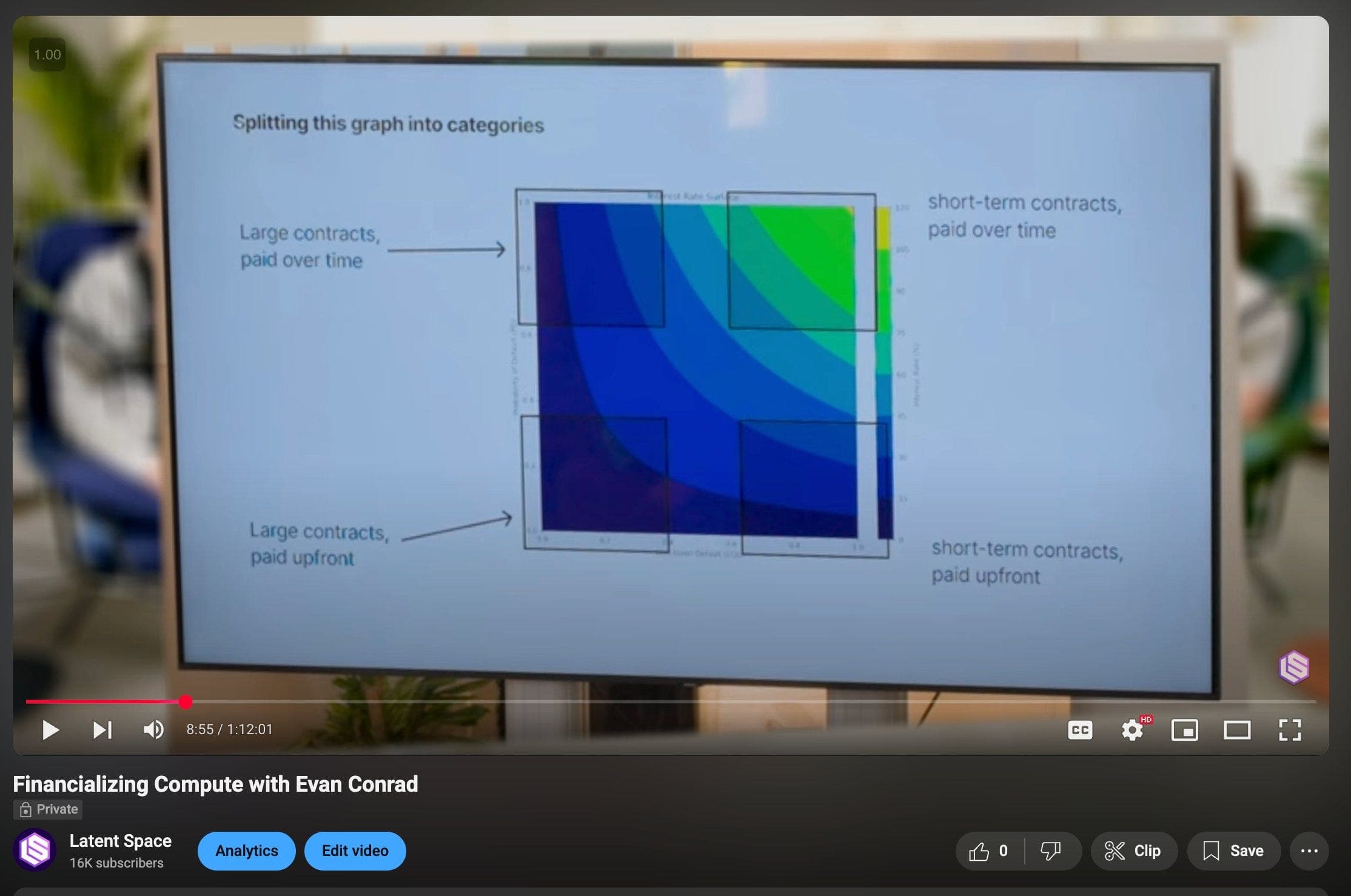
SF Compute: Commoditizing Compute to solve the GPU Bubble forever
Alessio FanelliswyxEvan Conrad
SF Compute treats GPUs as tradeable, financeable capacity rather than software infrastructure, turning unused commitments into a spot market and separating hardware ownership from higher-margin software businesses.Long-term contracts with creditworthy customers can make GPU ownership resemble real estate, while hourly resale improves utilization and flexibility; a future cash-settled GPU index could reduce financing risk, but standardization, chip supply and physical cluster reliability remain unresolved.
The Creators of Model Context Protocol
Alessio FanelliswyxDavidJustin
Model Context Protocol makes the AI application, rather than the model, the universal integration layer, connecting tools, resources, and prompts across products and vendors.Its richer bidirectional design could enable composable agents and remote workflows, but client support, OAuth-based authorization, and supply-chain trust remain the adoption constraints to monitor.