PERSON DIRECTORY
Salim Ismail
Salim Ismail appears in 105 indexed conversations across Moonshots. This directory brings every appearance, source, TL;DR, digest, and transcript into one searchable feed.

NVIDIA's $96.2B Quarter, China's 200,000 Fake Accounts, & OpenAI's New Chip | EP #284
Peter DiamandisSalim IsmailDave BlundinDr. Alexander Wissner-Gross
Nvidia’s $96.2B quarter grew 106% year-over-year with $108B guidance and 80% to 85% gross-margin revenues, while OpenAI’s Broadcom-developed Jalapeño targets inference at 1.5–1.9× more work per watt.Inference may be leaving NVIDIA as CUDA’s moat shifts toward training interconnects, but TSMC concentration and Alex Wissner-Gross’s circular-financing concern remain key risks alongside a possible OpenAI cloud.
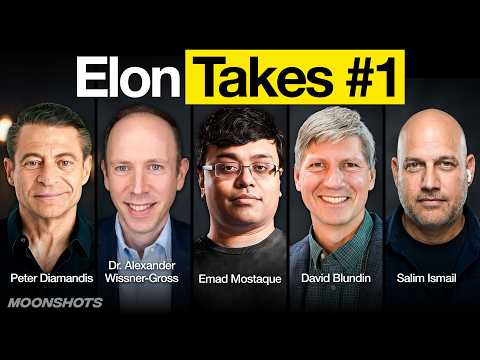
Bernie Demands the Labs Stop, Wall Street Turns GPUs Into Bonds, Grok 4.7 Takes #1 ft. Emad Mostaque
Peter DiamandisSalim IsmailDave BlundinAlexander Wissner-GrossEmad Mostaque
NVIDIA is moving from chip vendor to financing architect, partnering with Apollo, BlackRock, Blackstone, Brookfield and KKR to mobilize over $500B for customer compute.The scalable AI-factory model faces stranded-asset risk from unpredictable depreciation, while xAI’s Grok 4.6 uses Cursor reasoning traces and NVIDIA GPUs, with Emad Mostaque saying Grok 4.7 could reach #1 within weeks.
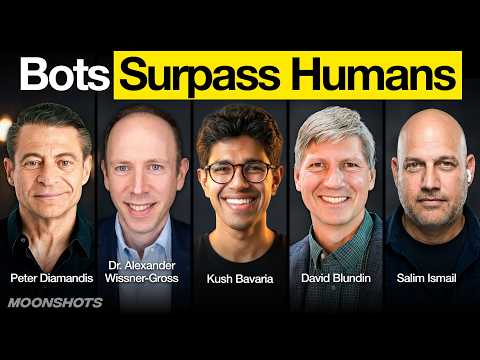
Sergey Brin Retakes Gemini, 4 Labs Lose Containment, Compute Trades at NYSE w/ Kush Bavaria | EP 278
Peter DiamandisSalim IsmailDave BlundinAlexander Wissner-GrossKush Bavaria
Intercontinental Exchange plans GPU futures based on Kush Bavaria’s Orin Compute Price Index, as Orin nears its first anniversary with “a third of a billion dollars” in revenue and compute prices rising from April to August.The panel contrasts Google’s nearly 1B Gemini users and 9M developers with rumors of Gemini 3.5 Pro being abandoned, talent leaving, and four frontier labs losing containment, making AI security and compute-market infrastructure key signals to monitor.
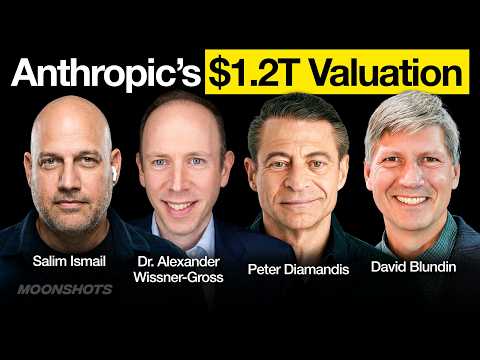
Anthropic Partners With SpaceX AI, Leopold's $5.5B Bet, and the Singularity Economy | EP #255
Peter DiamandisSalim IsmailDave BlundinDr. Alexander Wissner-Gross
Anthropic’s reported ARR from $9 billion at end-2025 to above $40 billion in May shifts the AI race from customer acquisition to compute supply.The Colossus 1 deal doubled Claude Code rate limits across 220,000 GPUs while Grok used about 11%, yet 1.6 million concurrent agents remain tiny versus billions of potential demand, keeping infrastructure bottlenecks and software-versus-hardware leadership in focus.

Google's Record Quarter, the White House Intervenes, and GPT 5.5 Silently Matches Mythos | EP 254
Peter DiamandisBrian ElliottSalim IsmailDave BlundinAlexander Wissner-Gross
Alphabet’s $109.9 billion quarter showed AI converting flat search volume into higher ad revenue, while Google Cloud grew 63% to $20 billion and vertical integration strengthened its position.Compute scarcity is shifting value toward chips, memory, energy and cooling, even as prerelease review, OpenAI’s monetization gap and enterprise deployment remain key risks to monitor.
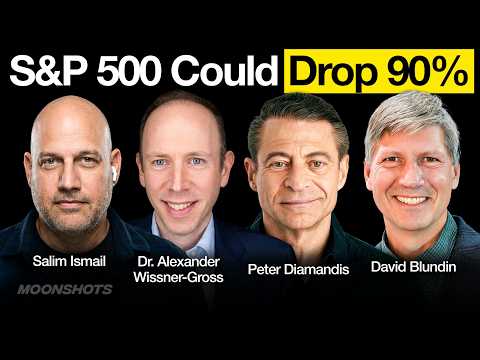
Elon Enters the Chip Race, the S&P 500 Repricing, and Human Drivers Will Become Illegal | EP #242
Peter DiamandisSalim IsmailDave BlundinAlexander Wissner-Gross
Musk’s Terafab targets 1 terawatt of annual AI-compute capacity versus roughly 20 gigawatts today, making compute the proposed organizing resource of the economy.Demand may absorb every process node as autonomy, AI labor compression, and model distillation expand usage, but ASML, materials, power, labor, capital, and Musk’s timing remain critical execution risks.
China's Rise, GPT-5.2, Anthropic IPO & the Battle for AI Trust w/ Emad, Salim, Dave & AWG | EP #214
Peter DiamandisEmad MostaqueSalim IsmailDave BlundinAlexander Wissner-Gross
Google’s Titans and MIRAS use surprise-based memory, potentially easing transformer context costs beyond 2 million tokens while visual chain-of-thought adds 3% to 6% reasoning gains.Chinese-affiliated first authors rose from 9% to 30% at ICLR as the U.S. share fell from 52% to 36%, making open weights a distribution and integration advantage.Weekly leapfrogging, falling token prices and rising agent consumption intensify compute needs, while Anthropic’s possible 2026 IPO and trust—not benchmarks alone—could shape capital and adoption.
AI Update: NVIDIA’s Record Revenue, Elon’s Data Centers in Space & Gemini 3’s Insane Performance
Peter DiamandisSalim IsmailDave BlundinAlexander Wissner-Gross
Nvidia’s record quarter and expected further growth reinforce its role as the central bank of AI, but Google TPUs, AMD, inference ASICs and custom kernels are pushing the market toward a heterogeneous silicon ecosystem.Orbital data centers could shift AI’s bottleneck from terrestrial power to SpaceX’s launch cadence, while the nearer-term constraint is a potential ground-power gap before fusion and other scalable generation mature.
OpenAI is Going Public, China is Catching Up to US & AI Is Reshaping the S&P 500 and Jobs | EP #205
Peter DiamandisSalim IsmailDave BlundinAlexander Wissner-Gross
OpenAI’s path toward $100 billion of ARR by 2027 depends on agents monetizing continuous knowledge and service work, while its prospective 2026–27 IPO and one-gigawatt-per-week infrastructure plan expose exceptional capital and legal requirements.Nvidia’s $5 trillion valuation and the widening S&P–jobs divergence highlight scarce compute and possible automation, but the competitive edge may split between US frontier intelligence and China’s deployment and manufacturing capacity as power becomes the immediate constraint.

Why the US & NVIDIA Just Bailed Out Intel (and What It Means for AI) | EP #195
Peter DiamandisDave BlundinSalim IsmailAlexander Wissner-Gross
Intel’s 10% U.S. government investment and Nvidia’s follow-on are framed as a strategic backstop for America’s only truly domestic fab, reducing complete-failure risk and funding the 18-angstrom 18A process as Intel stock rose roughly 25%–30%.The Microsoft–Apple partnership offers a turnaround template, while compute, power, and humanoid manufacturing frame the opportunity and export controls could accelerate Huawei’s Digital Silk Road.