PERSON DIRECTORY
Patrick O'Shaughnessy
Host of Invest Like the Best. Patrick O'Shaughnessy appears in 92 indexed conversations across Invest Like the Best, David Senra, Sohn Conference Foundation. This directory brings every appearance, source, TL;DR, digest, and transcript into one searchable feed.

Gabe Stengel - Building Investing Superintelligence - [Invest Like the Best, EP.492]
Patrick O'ShaughnessyGabe Stengel
Rogo’s model-era progression—from o1 Pro’s reliable search to Opus 4.5 handling junior finance work—supports a two-year race to redesign investment firms, not wait for better models.Its wedge is private-market dealmaking, where data rooms, DDQs, CRM and LP reporting still lack infrastructure, while high-value ideas can justify extreme token spend.The watchpoints are compaction, standardization, and whether incumbents move aggressively enough.
How to Raise a Few Billion Dollars
John Kim frames fundraising as a trust problem: desire minus fear drives action, while returns alone miss the motivations of most LPs and committees rarely make contrarian bets.His operating rules are to anchor scale to the first close, simplify the story, choose two of size, speed and terms, and build pipeline through conversion and bite size without sacrificing the differentiation that created the franchise.
Everything in Capital Markets is Downstream of Algorithms
Patrick O'ShaughnessyJeremy Giffon
Giffon argues that capital follows the “billion-dollar PDF”: in long-dated private markets, narrative is the great filter, while X’s unifeed increasingly selects the stories that move marginal security prices.AI shifts software economics from near-zero-cost strings to recurring compute, implying lower margins and greater scale; Giffon has largely sat out the jump ball, while LPs should underwrite manager incentives and the increasingly extractive SPV structure.
Investing a $120 Billion Balance Sheet with No Outside Investors
Patrick O'ShaughnessyVlad Barbalat
Liberty Mutual’s $120B balance sheet combines roughly $70–75B of reserves with growth credit and equity, while permanent mutual capital avoids shareholder pressure and supports 7–10% portfolio targets.Barbalat now questions whether AI makes future cash flows—and therefore multiples—structurally less visible, with four-year software credit appearing safer than 30-year Salesforce or Oracle debt and potentially steeper credit curves ahead.
Legendary Investor Dan Loeb on AI, Credit, & Third Point’s $25B Strategy
Dan Loeb has reduced macro to oil and AI, making technology fluency essential as Jensen's stack reshapes power, chips, models, and applications.Third Point sees leading AI companies as the most attractive sector, while its fulcrum-security framework targets mispriced credit such as Twitter debt and xAI obligations.AI is also destabilizing traditional quality investing and forcing structural sellers, leaving governance, due diligence, and the durability of pricing power as key risks to monitor.
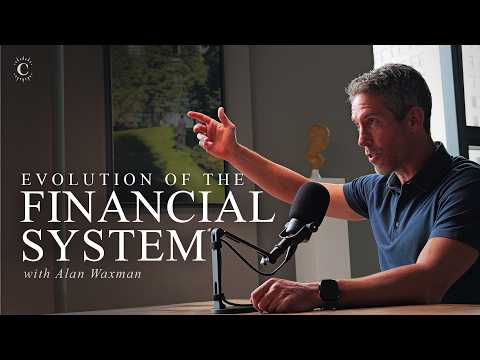
What 100 Years of American Finance Tells Us About Today
Patrick O'ShaughnessyAlan Waxman
Waxman attributes private-credit stress to a factory model that industrialized fundraising and investing after 2018, with FRE multiples rising from 10–15x to 25–30x+ as underwriting standards weakened.Perpetual private BDC redemptions exceeding the 5% limit are not yet systemic in his view, but AI could reprice every industry, making matched liabilities, governed inflows, and strategy breadth critical.
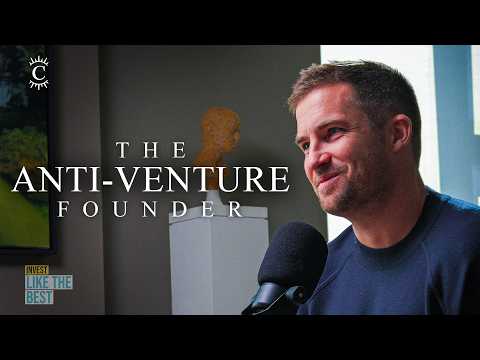
How to bet on yourself (without venture capital)
Patrick O'ShaughnessyWilliam Hockey
Column combines a bank’s regulatory permissions with software economics, earning 90%+ of revenue from per-API-call infrastructure for payments, deposits, and credit across fintech and emerging markets.Hockey’s debt-funded acquisition and near-bankruptcy experience shaped an earnings-funded, employee-owned model, while AI may reward banks and distribution-heavy brands; the open question is which specialized financial rails can compound without venture capital.
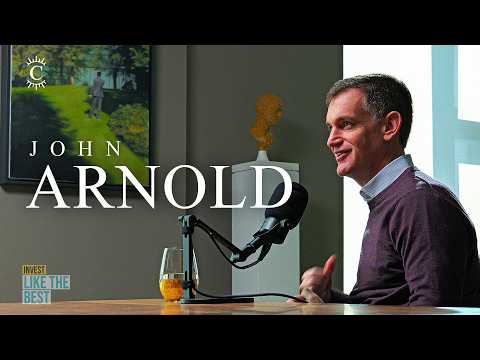
The World's Greatest Energy Trader on Markets, China, and AI
Patrick O'ShaughnessyJohn Arnold
China’s NIO built a robotic factory from shovel to first car in 17 months, with suppliers within 200 miles, highlighting a speed and supply-chain advantage over aging US plants.US energy demand is clear through 2030 but permitting is the bottleneck; delivered solar PPAs remain 50%+ above 2020 lows, while advanced geothermal is Arnold’s five-year call.
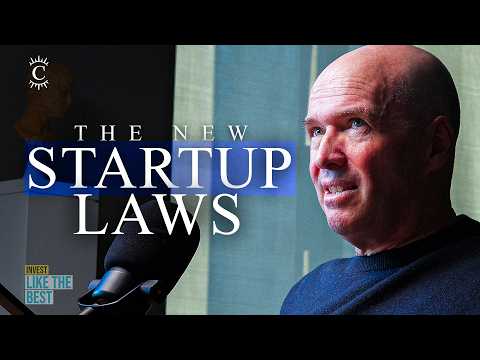
Why The Laws of Startup Physics Have Changed | Ben Horowitz Interview
Patrick O'ShaughnessyBen Horowitz
Ben Horowitz expects AI’s economic impact within 12–24 months because adoption needs no new infrastructure, while lower energy prices, less regulation, and a friendlier tax code strengthen the backdrop.AI-native companies such as Cursor can reach over $1B in revenue rapidly even as Salesforce and SAP remain difficult targets, but policy remains the tail risk and private markets must support companies toward a roughly $1B IPO threshold.
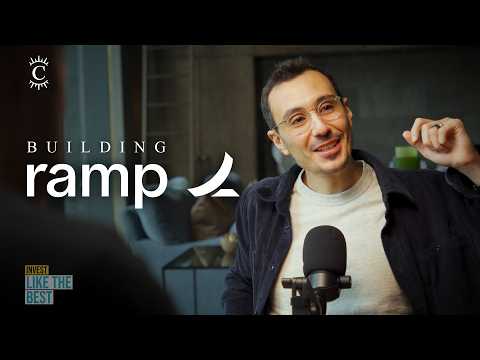
The Anatomy of Ramp's Hyper-Growth | Karim Atiyeh Interview
Patrick O'ShaughnessyKarim Atiyeh
Ramp is moving beyond LLM-assisted work toward agents embedded in finance workflows, with a policy agent enforcing expense rules 24/7 and inferring undocumented policies from customer behavior.The shift from TPV to paid software accelerated growth because customers demanded more, but agent pricing remains unresolved as Ramp expands from cards into self-driving finances and evaluates which payment rails ultimately matter.