PERSON DIRECTORY
Patrick O'Shaughnessy
Host of Invest Like the Best. Patrick O'Shaughnessy appears in 92 indexed conversations across Invest Like the Best, David Senra, Sohn Conference Foundation. This directory brings every appearance, source, TL;DR, digest, and transcript into one searchable feed.
Everything in Capital Markets is Downstream of Algorithms
Patrick O'ShaughnessyJeremy Giffon
Giffon argues that capital follows the “billion-dollar PDF”: in long-dated private markets, narrative is the great filter, while X’s unifeed increasingly selects the stories that move marginal security prices.AI shifts software economics from near-zero-cost strings to recurring compute, implying lower margins and greater scale; Giffon has largely sat out the jump ball, while LPs should underwrite manager incentives and the increasingly extractive SPV structure.
Investing a $120 Billion Balance Sheet with No Outside Investors
Patrick O'ShaughnessyVlad Barbalat
Liberty Mutual’s $120B balance sheet combines roughly $70–75B of reserves with growth credit and equity, while permanent mutual capital avoids shareholder pressure and supports 7–10% portfolio targets.Barbalat now questions whether AI makes future cash flows—and therefore multiples—structurally less visible, with four-year software credit appearing safer than 30-year Salesforce or Oracle debt and potentially steeper credit curves ahead.
Legendary Investor Dan Loeb on AI, Credit, & Third Point’s $25B Strategy
Dan Loeb has reduced macro to oil and AI, making technology fluency essential as Jensen's stack reshapes power, chips, models, and applications.Third Point sees leading AI companies as the most attractive sector, while its fulcrum-security framework targets mispriced credit such as Twitter debt and xAI obligations.AI is also destabilizing traditional quality investing and forcing structural sellers, leaving governance, due diligence, and the durability of pricing power as key risks to monitor.
What 100 Years of American Finance Tells Us About Today
Patrick O'ShaughnessyAlan Waxman
Waxman attributes private-credit stress to a factory model that industrialized fundraising and investing after 2018, with FRE multiples rising from 10–15x to 25–30x+ as underwriting standards weakened.Perpetual private BDC redemptions exceeding the 5% limit are not yet systemic in his view, but AI could reprice every industry, making matched liabilities, governed inflows, and strategy breadth critical.
The World's Greatest Energy Trader on Markets, China, and AI
Patrick O'ShaughnessyJohn Arnold
China’s NIO built a robotic factory from shovel to first car in 17 months, with suppliers within 200 miles, highlighting a speed and supply-chain advantage over aging US plants.US energy demand is clear through 2030 but permitting is the bottleneck; delivered solar PPAs remain 50%+ above 2020 lows, while advanced geothermal is Arnold’s five-year call.
Why The Laws of Startup Physics Have Changed | Ben Horowitz Interview
Patrick O'ShaughnessyBen Horowitz
Ben Horowitz expects AI’s economic impact within 12–24 months because adoption needs no new infrastructure, while lower energy prices, less regulation, and a friendlier tax code strengthen the backdrop.AI-native companies such as Cursor can reach over $1B in revenue rapidly even as Salesforce and SAP remain difficult targets, but policy remains the tail risk and private markets must support companies toward a roughly $1B IPO threshold.

Peter Lacaillade - Backing The Best Managers In Private Markets - [Invest Like the Best, EP.437]
Patrick O'ShaughnessyPeter Lacaillade
Private markets delivered 3-5% alpha over public equities for 25 years, while persistent top-manager performance can add 5%+.SCS underwrites 16-18% net IRR and 2.5x through pooled vehicles, targeting lower-middle-market businesses bought at 5-8x EBITDA and sold at 12-18x after operational growth.The retail wave bears watching: interval funds bid mid-90s versus sophisticated buyers at mid-80s, while quarterly liquidity may still mean being locked up for five, six years.
The Data on America's Economic Split | Andrew Milgram Interview
Patrick O'ShaughnessyAndrew Milgram
Anonymized data from 1,200 US middle-market companies shows EBITDA down 20–25% since 2019, negative net profits for two years, and another 20% failing debt-service coverage in 2024.Tariffs above 5–6% could crush these firms, while private-credit defaults may be understated; waiver rates, amendment rates, and PIK exposure are more revealing than reported defaults.
How This VC Went From Broke to Becoming the Hot Hand in Silicon Valley
Patrick O'ShaughnessyRamtin Naimi
Abstract’s thesis is that multi-stage firms historically led most power-law seed rounds, while Naimi’s concentrated 5% from a $100M fund can exceed 15% from a $1.5B co-lead in look-through exposure.His sole-node Series A process claims highest-decile valuations and lowest dilution, but 4–5x markups and 30–40% IRR within months echo 2021, while AI application valuations remain undetermined.
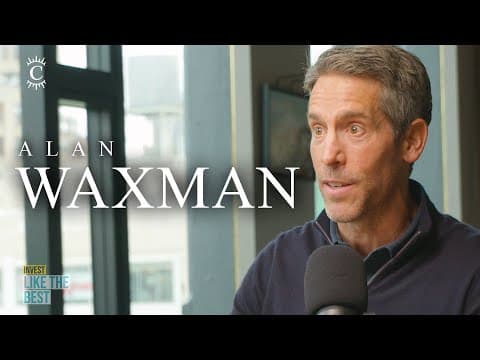
The Investment Firm That Can 'Do Anything' | Sixth Street CEO Alan Waxman
Patrick O'ShaughnessyAlan Waxman
Alan Waxman’s edge is unitizing risk by business quality, capital-structure attachment point, and documents, letting Sixth Street compare disparate deals across asset classes.With 450-500 monthly deals, 15-25 live themes, and a $30B TAL vehicle, the firm can migrate as themes decay over 12 to 36 months, but leverage-driven returns, AI labor disruption, and wealth-channel structure remain watchpoints.