PERSON DIRECTORY
Patrick O'Shaughnessy
Host of Invest Like the Best. Patrick O'Shaughnessy appears in 92 indexed conversations across Invest Like the Best, David Senra, Sohn Conference Foundation. This directory brings every appearance, source, TL;DR, digest, and transcript into one searchable feed.
Everything in Capital Markets is Downstream of Algorithms
Patrick O'ShaughnessyJeremy Giffon
Giffon argues that capital follows the “billion-dollar PDF”: in long-dated private markets, narrative is the great filter, while X’s unifeed increasingly selects the stories that move marginal security prices.AI shifts software economics from near-zero-cost strings to recurring compute, implying lower margins and greater scale; Giffon has largely sat out the jump ball, while LPs should underwrite manager incentives and the increasingly extractive SPV structure.
Investing a $120 Billion Balance Sheet with No Outside Investors
Patrick O'ShaughnessyVlad Barbalat
Liberty Mutual’s $120B balance sheet combines roughly $70–75B of reserves with growth credit and equity, while permanent mutual capital avoids shareholder pressure and supports 7–10% portfolio targets.Barbalat now questions whether AI makes future cash flows—and therefore multiples—structurally less visible, with four-year software credit appearing safer than 30-year Salesforce or Oracle debt and potentially steeper credit curves ahead.
Legendary Investor Dan Loeb on AI, Credit, & Third Point’s $25B Strategy
Dan Loeb has reduced macro to oil and AI, making technology fluency essential as Jensen's stack reshapes power, chips, models, and applications.Third Point sees leading AI companies as the most attractive sector, while its fulcrum-security framework targets mispriced credit such as Twitter debt and xAI obligations.AI is also destabilizing traditional quality investing and forcing structural sellers, leaving governance, due diligence, and the durability of pricing power as key risks to monitor.
What 100 Years of American Finance Tells Us About Today
Patrick O'ShaughnessyAlan Waxman
Waxman attributes private-credit stress to a factory model that industrialized fundraising and investing after 2018, with FRE multiples rising from 10–15x to 25–30x+ as underwriting standards weakened.Perpetual private BDC redemptions exceeding the 5% limit are not yet systemic in his view, but AI could reprice every industry, making matched liabilities, governed inflows, and strategy breadth critical.
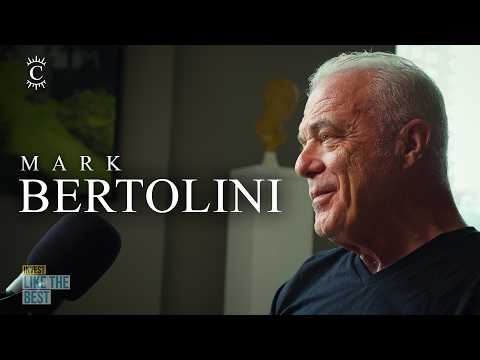
The CEO Who Cheated Death, Slept an Hour a Night, and Built a Healthcare Empire
Patrick O'ShaughnessyMark Bertolini
Oscar Health is pursuing a defined-benefit-to-defined-contribution shift in healthcare, targeting 125 million people through individual ACA plans, while its cloud-native platform and “almost two dozen” LLMs support lower operating costs and disease-management economics.The CHOICE provision’s Senate removal over a $30B tax score underscores regulatory resistance, while Bertolini’s Aetna record—75% lower end-of-life costs and 652% eight-year TSR—illustrates the potential payoff from operational and benefit redesign.

Bill Gurley - The Gift and The Curse of Staying Private - [Invest Like the Best, EP.427]
Patrick O'ShaughnessyBill Gurley
Venture’s private-company backlog reflects roughly 1,000 firms raising more than $1 billion each, while mega-funds and paper marks weaken incentives to reset valuations.With IPOs closed, holding periods stretching toward 10-to-15 years, and annual dilution of 3%-6%, LP liquidity pressure and a potential reset remain the key catalysts.

Cliff Sosin - Investing in Carvana - [Invest Like the Best, EP.421]
Patrick O'ShaughnessyCliff Sosin
Carvana’s moat is an integrated system spanning acquisition, logistics, reconditioning, software, lending, registration and trust, built over more than 10 years and roughly $10 billion rather than through online retail alone.EBITDA margins around 10.5% and rising toward management’s stated 13%-14% range compare with roughly 4.5% for the average dealership, but the 99% collapse exposed the continuing risks of immature operations, leverage, demand pull-forward and irrational auto-loan pricing.