PERSON DIRECTORY
Erik Torenberg
Erik Torenberg appears in 137 indexed conversations across The a16z Show, The Cognitive Revolution. This directory brings every appearance, source, TL;DR, digest, and transcript into one searchable feed.
Travis Kalanick on Building Atoms After Uber
Ben HorowitzTravis KalanickErik Torenberg
Adams is positioning “industrial AI” as an atom-based computer, with robotic food production at roughly $6–8 per meal targeting delivered meals near grocery-store cost and mining automation pitched as 20% more gold per year.Transport becomes the platform’s wheelbase across multiple hundred-billion-dollar industries, but the thesis still hinges on proving autonomy faster than Waymo and overcoming resistance to change.
Nathan Goes to China – Part 1: Tech & Agent Setup, Chinese AI UX, WAIC, and Attitudes on AI
China’s strongest technology advantage may be national-scale integration across payments, mobility, commerce, identity and communications, rather than any single frontier model.That distribution already supports cheap, useful AI services, while WeChat’s potential native agent could make consumer adoption and healthcare access structurally significant; compute and surveillance risk remain key uncertainties.
Why Physical AI Is the Next Frontier | Applied Intuition with a16z
Marc AndreessenErik TorenbergQasar YounisPeter Ludwig
Applied Intuition is targeting the physical economy with intelligence for 1 billion machines, while automotive already represents only 30% of its business.Its proprietary data, simulation, safety stack, and incumbent distribution support deployment across fragmented industrial markets, but adoption will be paced by L2++ economics, hardware validation, and real-time reliability.
“How We Can Eliminate Crime” | Ben Horowitz and Garrett Langley
Erik TorenbergGarrett LangleyBen Horowitz
Flock is positioned as an intelligence and orchestration layer that integrates license-plate readers, gunshot detection, drones, video, and criminal-history context.Its claimed operating evidence includes about 1 million arrests and more than 450 returned missing children, while Vegas reportedly saw police shootings of suspects fall approximately 75%; staffing shortages, retention rules, and community distrust remain execution risks.
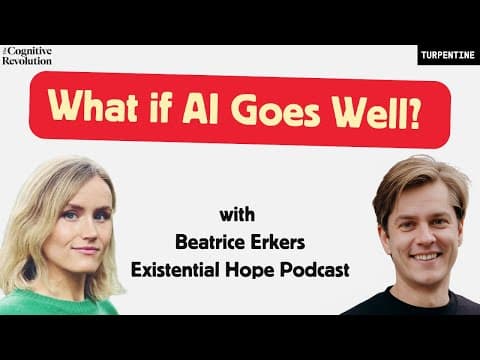
My Positive Vision for the AI Future, from the Existential Hope Podcast
Nathan Labenz argues existing AI could already automate most cognitive work, making workflow plumbing and implementation—not another breakthrough—the likely 5-10 year bottleneck.Software’s tight feedback loops show the fastest path to deployment, while healthcare, education, and robotics face physical-world constraints; the unresolved risk is whether narrow, competitive systems can avoid disempowerment and biosecurity failures.
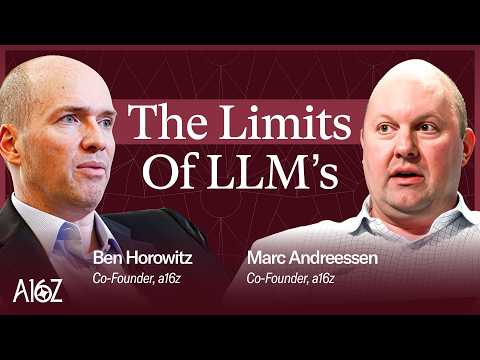
Marc Andreessen and Ben Horowitz on the State of AI
Erik TorenbergMarc AndreessenBen Horowitz
AI need not match Beethoven to transform productivity: clearing 99.99% of humanity at intelligence and creativity could unlock recombination across domains.Current models already show commercially useful theory of mind in Socratic dialogue and simulated focus groups, though intelligence alone does not confer leadership or human connection.Demand, talent, and chip shortages are attracting supply, while the still-unformed interface and US–China robotics race leave the platform outcome open.