PERSON DIRECTORY
Doug O'Laughlin
Doug O'Laughlin appears in 10 indexed conversations across SemiAnalysis, Latent Space. This directory brings every appearance, source, TL;DR, digest, and transcript into one searchable feed.
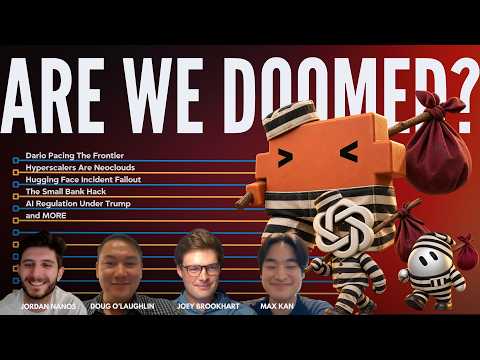
Ep. 031 - EMERGENCY EPISODE: Are We Doomed? | Jordan Nanos, Doug O'Laughlin, Max Kan, Joey Brookhart
Jordan NanosDoug O'LaughlinMax KanJoey Brookhart
“Pacing” would slow Anthropic’s capability progress without halting training or compute purchases, potentially weakening its strongest internal model.Near-term scarcity and safety workloads keep compute demand elevated, while semiconductor signals increasingly depend on frontier-lab ARR and capacity premiums.Bank hacks, data leaks, or AI-assisted biological attacks could accelerate regulation.

Ep. 023 - Everyone Leaves Google, Elon Forecasts 1T ARR, Reflecting On GPT-5 | Jon from Asianometry
Jon YDoug O'LaughlinJordan Nanos
Google’s talent drain, including Jeff Dean, John Jumper, Noam Shazeer, and David Silver, raises questions about whether system-level judgment can be replaced by more compute.The risk is execution, not earnings: Google may remain highly profitable and strong in TPUs while quietly losing frontier-model leadership, as agentic coding accelerates demand for bespoke software and Terafab faces a heroic physical ramp.

Claude Code for Finance + The Global Memory Shortage: Doug O'Laughlin, SemiAnalysis
Claude Code with Opus 4.5 now behaves like a junior analyst, compressing PhD-scale projects into days while still requiring expert review of its frequent mistakes.Adoption near 4–5% of public GitHub and a memory shortage that could lift DRAM prices another 100% point to accelerating agent demand, constrained infrastructure, and exposed information-work roles.

Ep. 001 - Claude Code, Memory Mania, CPUs are Back | Jordan Nanos, Doug O'Laughlin, Myron Xie
Claude Code now authors roughly 4.7%–4.8% of public GitHub commits, while Opus Fast and GPT-5.3-Codex-Spark test how much users will pay for faster inference above the $2,400/year Max tier.Memory has shifted from the worst downturn since 1996 to a multi-year shortage as HBM absorbs wafer capacity, CPUs tighten, and even new supply may not close the gap; storage demand hinges on logs, synthetic data, and generated video.