PERSON DIRECTORY
Ben Gilbert
Host of Acquired. Ben Gilbert appears in 20 indexed conversations across Acquired. This directory brings every appearance, source, TL;DR, digest, and transcript into one searchable feed.
Google Part III: The AI Company. Google is amazingly well-positioned... will they win in AI? (Audio)
Google combines Gemini, an estimated 2–3 million TPUs, a $50 billion-plus cloud business, global consumer distribution, and a search monopoly funding roughly $370 billion of annual revenue and $140 billion of earnings—the only end-to-end AI stack the hosts can identify.That advantage could make Google the lowest-cost producer of tokens, but the central risk remains whether AI can monetize without cannibalizing search’s economics and roughly 90% share, with Waymo offering a precedent for patience while timelines remain uncertain.

Google Part II: Alphabet (Audio)
Google’s search windfall funded Gmail, Maps, Docs, YouTube, Chrome, and Android, transforming apparent distraction into a defense against Microsoft, Apple, and rival platforms.YouTube’s $1.65 billion acquisition became an A+ asset generating over $50 billion in 2024 revenue, while Chrome and Android protected distribution; Alphabet still depends heavily on search and must convert its assembled AI talent into durable growth.

Google Part I: Origins of Search. How the Best Business in Human History Happened (Audio)
Google compounded a roughly 90% search share, an estimated 87% gross margin, and a giant market into what the hosts call “the single greatest business of all time.”PageRank, commodity-hardware infrastructure, and Ad Rank aligned relevance, distribution, advertiser liquidity, and revenue, turning technical constraints and increasing returns into a durable moat.AI is the first serious challenge to an apparently unassailable franchise, while Alphabet’s roughly 20-times earnings multiple suggests markets see its future as materially less secure.
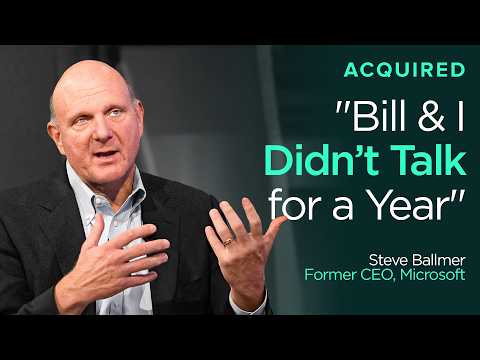
The Steve Ballmer Interview
Ben GilbertDavid RosenthalSteve Ballmer
Microsoft turned DOS, Windows, Office, Exchange and Active Directory into an enterprise stack that sold peace of mind through three-year recurring agreements, then incubated Azure to capture customer hardware and labor spending.The company’s “Windows Everywhere” mindset missed mobile and search, while cloud succeeded through protected development and accumulated capability; Microsoft’s future depends on sustaining independent locomotives rather than extending legacy franchises.