
Vol.234 宏观漫谈110|全球流动性的困境与中国五类经济主体的金融结构转型(9.2录制)
全球流动性或已见顶,AI数据中心与美债、美股争夺资金,资本开支转向惩罚激进;李丰的英伟达实验提示延期、涨价、自由现金流下降和应收高企风险。中国融资结构与房地产、保险、A股筹码调整或重塑居民资产配置,滞胀与泡沫出清仍待观察。

Polaris: Earn Yield On Gold, ETH, and BTC With No Counterparty Risk | DeFi Frontier
Polaris targets DeFi’s “yield trap” with pETH, a bonding-curve collateral, and pUSD, an immutable, counterparty-free stablecoin that can expand through direct 1:1 minting above peg. pETH splits into fPETH and vPETH, with quoted yield initially around 36% annualized on ETH, while bonding-curve outflows can add volatility; audits are expected in about a month and launch is targeted for Q4, most likely around November.

Vol.229 宏观漫谈109|我们正处于一个美元主导的资本周期上升阶段尾部(8.6录制)
美元计价资产正处于资本周期上升阶段尾部,增量资金不足使市场转向宽幅轮动与存量博弈。美国美债将突破40万亿美元,利息与国防开支合计接近3万亿美元、占财政收入一半以上,加息和降息都受约束。日元流动性反转、数据中心私募债与霍尔木兹海峡构成黑天鹅,后续需观察美债发行压力、黄金及中国超额储蓄是否转化为持续流入。

Is STRC Back? Apyx's Parker White On What Comes Next and Tokenizing STRC For DeFi
STRC’s deepest drawdown has lasted a month and a half, but Parker White calls it “bent, not broken,” not yet a dead thesis.Stretch is an early rung in Saylor’s climb toward AAA-rated, 30-year corporate bonds; re-pegging depends on daily dividends, raising the $101 company call, possible ATM pauses, and time.The 2027–28 convert wall remains a confidence risk.

Ep. 021 - The AI Project Trinity: Capital, Offtake, Data Center (Datacenter, Energy)
Dan NishballZane FongKang Wen CheangJordan Nanos
AI infrastructure’s bottleneck is shifting to balance-sheet capacity: $11 trillion of 2024-2029 capex could require roughly $7.1 trillion of funding, while five-year hyperscaler offtake excludes short-duration demand.NVIDIA’s GB300 backstop makes neocloud capacity lendable by flooring cash flow, but selects repeat buyers and ties NCP access to its stack; rapid GPU depreciation and utilization gaps remain the underwriting risk.
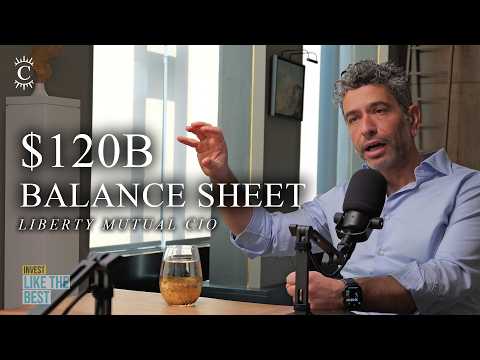
Investing a $120 Billion Balance Sheet with No Outside Investors
Patrick O'ShaughnessyVlad Barbalat
Liberty Mutual’s $120B balance sheet combines roughly $70–75B of reserves with growth credit and equity, while permanent mutual capital avoids shareholder pressure and supports 7–10% portfolio targets.Barbalat now questions whether AI makes future cash flows—and therefore multiples—structurally less visible, with four-year software credit appearing safer than 30-year Salesforce or Oracle debt and potentially steeper credit curves ahead.

Why Private Credit Is Moving Onchain — And What DeFi Gets Right and Wrong About It
DeFi DadDavid VatchevArpan GautamRob Montgomery
Fasanara’s short-duration, asset-backed receivables model contrasts with longer-duration corporate private credit, spanning about 300,000 positions across 45 countries and averaging nearer to 100 days.Gautam says the fund deployed by Noon had no negative month through the First Brands stress test, while tokenization still requires liquidity matching, transparency, and rigorous underwriting; monitor Noon’s T+5 targets and Fasanara’s on-chain expansion.

Legendary Investor Dan Loeb on AI, Credit, & Third Point’s $25B Strategy
Dan Loeb has reduced macro to oil and AI, making technology fluency essential as Jensen's stack reshapes power, chips, models, and applications.Third Point sees leading AI companies as the most attractive sector, while its fulcrum-security framework targets mispriced credit such as Twitter debt and xAI obligations.AI is also destabilizing traditional quality investing and forcing structural sellers, leaving governance, due diligence, and the durability of pricing power as key risks to monitor.

The $1 Trillion Firm That Refuses The Private Equity Label | a16z
Apollo’s slightly-over-$1 trillion platform is 80% investment-grade credit, making origination capacity—not available capital—the binding constraint on growth.Daily estimated valuations for private investment-grade products by June 30 and all credit by the end of September could widen access as $800 billion of 2026 capex from four public companies tests financing capacity.

Tori: Tokenizing 15% Yield From Institutional FX Markets, Uncorrelated With Crypto | DeFi Frontier
Torus brings dollar-hedged emerging-market carry on-chain through TRUSD, targeting high-single- to mid-teen yields that Sam says are structurally uncorrelated with crypto cycles, backed by reserves and real-time Accountable verification.The spread persists because managed FX markets and limited local hedging leave forward-market inefficiencies, while bank-scale capacity exceeds the yield-bearing stablecoin market; yield compression, smart-contract attacks, and a May launch remain key watchpoints.