SHOW DIRECTORY
Moonshots
Conversations about exponential technologies, AI, longevity, space, robotics, and the entrepreneurs attempting unusually large missions.
BIDCLUB DESCRIPTION
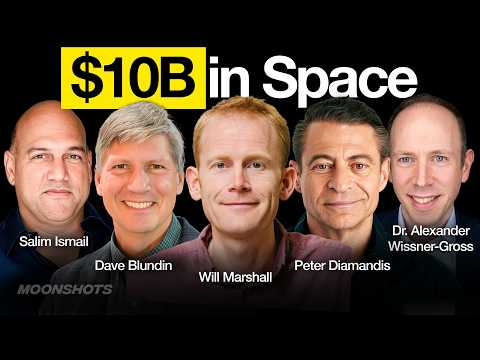
The $10B Satellite Empire Putting AI in Orbit, Why Chips Beat Rockets & China's #1 Open Model | #266
Peter DiamandisWill MarshallSalim IsmailDave BlundinDr. Alexander Wissner-Gross
Planet’s roughly 200 satellites generate 25 TB daily and a 150-PB, ten-year archive with 3,000 observations per land point, creating an irreproducible data moat as AI makes Earth searchable.Owl, Pelican, and Tanager add resolution, revisit rate, latency, and spectral depth, while orbital compute could become cost-competitive at $200-$300 per kilogram; inference efficiency, export policy, and GLM-5.2 remain key variables.

Pope Leo vs. AI, GPT 5.5 Beats Claude, and Sam Altman Walks Back Job Apocalypse | EP #259
Peter DiamandisSalim IsmailDave BlundinAlexander Wissner-Gross
GPT-5.5 scored 70% on Deep Software Engineering versus Claude Opus 4.7’s 54%, while token prices fell to 50 cents per million as usage reached 25 trillion monthly.That combination shifts leverage toward compute access, model contracts, verification and pricing control, while the Vatican’s 42,000-word encyclical and shelved 90-day review expose governance’s race against China’s estimated three-to-eight-month frontier-model gap.

SpaceX Goes Public, Claude’s Mythos Release, and the US Data Center Delay | EP #246
Peter DiamandisSalim IsmailDave BlundinDr. Alexander Wissner-Gross
SpaceX’s proposed $75 billion IPO at a $2 trillion valuation is primarily a Starlink monetization event, with Peter Diamandis assigning 75%-80% of value to the satellite business.The thesis depends on exceptional growth, orbital data centers and unproven Starship refueling, while Anthropic and OpenAI compete for the same scarce IPO capital and Mythos raises unresolved cybersecurity and release-timing risks.
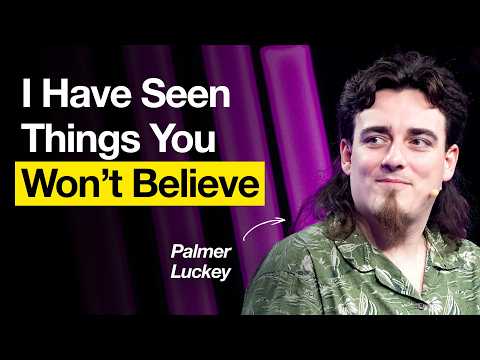
Aliens, AI Weapons, China & Global Conflict: Palmer Luckey Sounds the Alarm | EP #169
Luckey’s differentiated defense thesis relies on human-level AI, fast decision cycles and mass replication rather than superintelligence, with Lattice turning pervasive sensing into battlefield prediction.China’s roughly 300-times US shipbuilding advantage makes scalable production central: Anduril targets relevant capabilities before the end of 2027, a $900 million Columbus factory before 2030, and an eventual IPO to fund F-35-scale programs.