SHOW DIRECTORY
Hard Fork
Journalists Kevin Roose and Casey Newton explore and make sense of the latest developments in the rapidly changing world of technology.
SOURCE DESCRIPTION · RSS

Are We in an A.I. Bubble? We're About to Find Out.
Kevin RooseCasey NewtonErin GriffithMike IsaacJasmine Sun
Anthropic’s possible $100 billion IPO at a $2 trillion valuation would put its AI economics under public-market scrutiny: first-half 2026 revenue reached $16.3 billion, up 14X, while operating losses narrowed to roughly $600–700 million.Griffith estimates third-quarter growth at 44%; the key test is whether the slowdown reflects competitors catching up or broader demand weakness, as non-cancellable compute commitments leave the company exposed if usage falls.
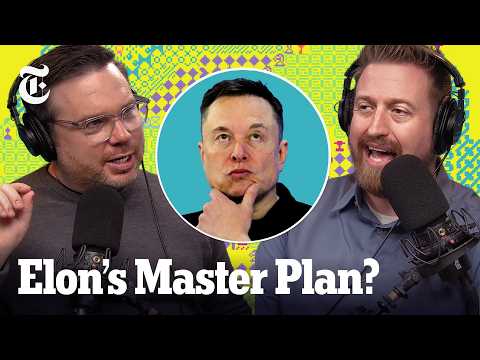
SpaceX Buys xAI: What's Behind Elon’s Mega-Merger?
Kevin RooseCasey NewtonMatt Schlicht
SpaceX’s reported all-stock acquisition of xAI, valuing the combined company at $1.25 trillion, gives a profitable rocket business financial cover for an AI lab’s enormous spending.Orbital compute offers a powerful IPO narrative and possible launch advantage, but terrestrial infrastructure remains “plan A” while X’s regulatory liabilities create accountability risks.Project Genie’s expensive 60-second worlds already rattled gaming stocks, raising a catalyst for interactive AI while leaving the economic impact on incumbent game companies unresolved.
Is This an A.I. Bubble? + Meta’s Missing Morals + TikTok Shock Slop
Kevin RooseCasey NewtonJeff Horwitz
AI adoption may endure even as OpenAI’s reported valuation reaches $500 billion and the Magnificent Seven spend over $100 billion quarterly.Cursor’s negative gross margins and possible API-supplier losses expose fragile unit economics; weak enterprise ROI may reflect top-down deployment.Meta’s approved child-directed romantic content raises regulatory risk despite real advertising cash, while TikTok’s “shock slop” tests mass-market AI-media adoption.
GPT-5 Backlash + Perplexity C.E.O. Aravind Srinivas on the Browser Wars + Hot Mess Express
Kevin RooseCasey NewtonAravind Srinivas
GPT-5’s backlash showed that migration can disrupt workflows and trust, prompting OpenAI to restore GPT-4o access and model choice.Sycophancy is a product-safety and demand-side risk: users may prefer flattering models, making less-sycophantic upgrades commercially harder.Perplexity’s Comet bets the browser can own agentic relationships as models commoditize, while its $34.5 billion Chrome bid depends on unlikely forced divestiture and a potentially two-year appeal.