Positioning for Uniswap v4: Why Bunni ($LIT) Might Be Your Best Bet
As the DeFi landscape continues to evolve, one of the most anticipated upgrades is the forthcoming launch of Uniswap v4. Uniswap has been a cornerstone of DeFi since its inception, and its v4 upgrade could further solidify its blue-chip status. But how can investors capitalize on this launch? While buying UNI might seem like the obvious choice, investors looking for higher returns (albeit more risk) might want to explore smaller, more agile projects building on Uniswap v4 like @bunni_xyz
Uniswap's Market Dominance
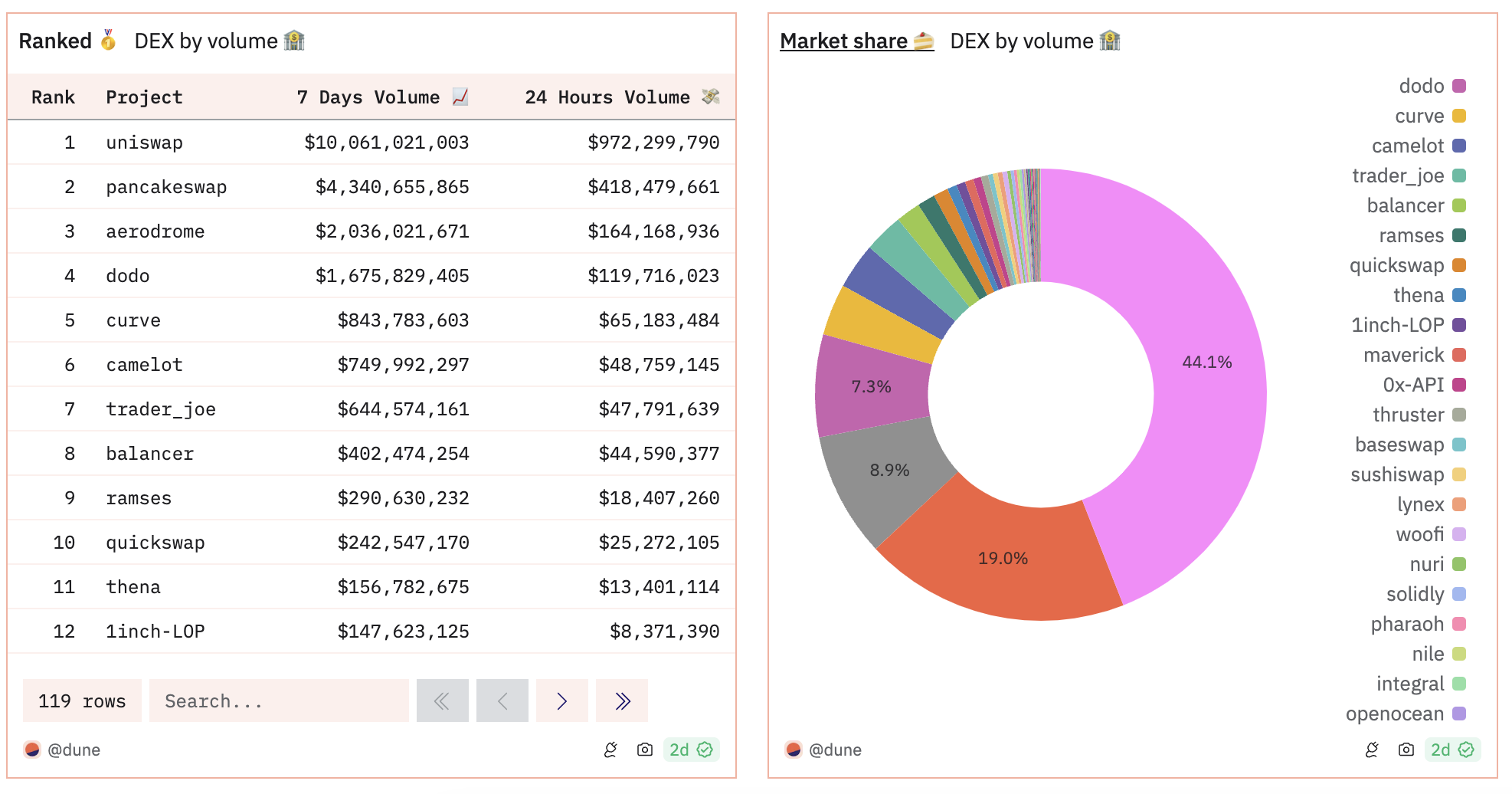
Uniswap is already the leading DEX by market share (44%) and trading volume and it's widely regarded as a blue-chip DeFi asset. Its influence on the DeFi sector cannot be overstated, and the upcoming v4 upgrade is expected to introduce several key innovations:
Key Upgrades in Uniswap v4
- ◆Hooks: A new feature that allows developers to execute custom code at various stages of a transaction, enabling greater programmability and flexibility.
- ◆Singleton Contracts: These contracts reduce gas costs by consolidating multiple operations into a single transaction, enhancing the overall efficiency of the protocol.
- ◆Native Time-Weighted Average Price (TWAP) Oracles: These oracles will be more efficient and offer better integration with other DeFi protocols, reducing the need for external oracles and improving security.
While Uniswap v4 brings improvements that will make the platform more versatile, cost-effective, and better integrated with the broader DeFi ecosystem, these upgrades are mainly designed for developers. Other teams will need to leverage these tools and create user-friendly features and products. One such team has been diligently working over the past year, preparing to launch its offerings on day one of Uniswap v4.
Introducing Bunni V2
@bunni_xyzis a decentralized exchange fully embracing Uniswap v4’s capabilities.
Bunni's Unique Functionality:
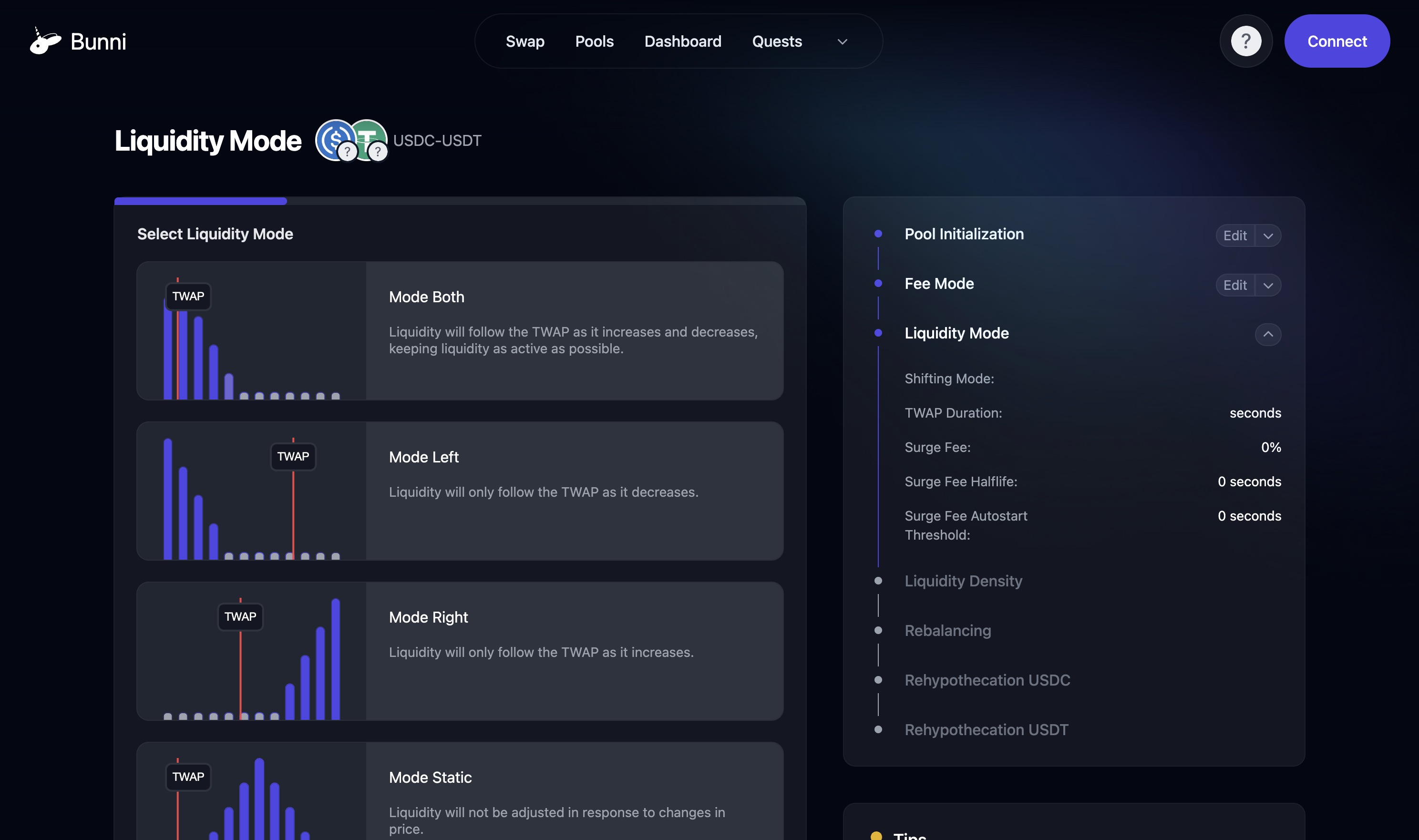
- ◆Liquidity Density Functions (LDF): Bunni offers complete customizability of liquidity distribution. Liquidity providers can shape their liquidity across different price ranges, tailoring their strategy to market conditions and personal preferences.
- ◆Dynamic Liquidity Management: Bunni combines shifting and morphing liquidity, allowing liquidity to adjust automatically based on market conditions or predefined criteria. This enables LPs to optimize risk management and dynamically adapt their positions in real-time, such as during significant market events or volatility. Additionally, Bunni features Autonomous Rebalancing, eliminating the need for external keepers to maintain optimal token ratios, making liquidity management more efficient for LPs.
- ◆Rehypothecation of Idle Liquidity: Bunni allows LPs to rehypothecate their idle liquidity, meaning they can earn additional yield by lending out liquidity that would otherwise be sitting unused, effectively maximizing their returns.
- ◆Solver Management: LPs can leverage solvers to manage their positions, reducing toxic flow and enhancing returns with an extra APR. Read more here.
- ◆Dynamic Fee Structures: Bunni introduces dynamic fees that adjust based on market volatility. This allows LPs to capture more trading fees during high-volatility periods and protect traders from sandwich attacks.
Two aspects of Bunni v2 that I think will establish it as the dominant Uniswap v4 DEX are liquidity density functions and rehypothecation of idle liquidity.
More on Liquidity Density Functions:
Liquidity density functions represent a significant evolution in decentralized exchanges' liquidity management. By offering LPs unprecedented control over their liquidity distribution, Bunni V2 enables more sophisticated strategies tailored to individual preferences, risk tolerance, and market conditions. This flexibility not only improves potential returns for LPs but also enhances the overall efficiency and liquidity in DeFi.
The Possibilities That LDFs Open Up
- ◆A Foundation for Any Liquidity Strategy: From passive liquidity strategies to token launch pools like @FjordFoundryor @BaselineMarketsor even entirely new financial primitives, Bunni V2 offers the infrastructure and modularity to support it all. Liquidity Distribution Functions enable developers and liquidity providers to design, test, and scale any liquidity strategy.
- ◆Volatility-Based Strategies: LDFs can be designed to adjust liquidity based on volatility. For example, in times of low volatility, an LP might spread liquidity across a wider range, capturing more trades. In contrast, during high volatility, the LP could tighten the liquidity range around the current price to take advantage of rapid price movements and higher trading volumes.
- ◆Event-Triggered Adjustments: LPs can set up LDFs that respond to specific market events or conditions, such as changes in market sentiment, macroeconomic announcements, or even blockchain-based events like protocol upgrades or token migrations.
- ◆Arbitrage Optimization: LPs with sophisticated strategies could use LDFs to create liquidity distributions that facilitate or capitalize on arbitrage opportunities between different trading pairs or platforms. By concentrating liquidity in ranges where price discrepancies are expected to occur, LPs can attract arbitrage traders and capture the resulting trading fees.
- ◆Predictive Modeling: Advanced LPs could use predictive algorithms or machine learning models to forecast price movements and adjust their LDFs accordingly. For example, an algorithm could predict that an asset’s price will range between $100 and $110 over the next 24 hours, and the LDF could be adjusted dynamically to concentrate liquidity in that range as the price moves, maximizing potential returns.
More on Rehypothecation:
At its core, rehypothecation allows liquidity providers to maximize the returns of their assets by lending out idle liquidity to other protocols, effectively earning yield on liquidity that would otherwise be sitting unused. Because of this, LPs should automatically be earning more on Bunni v2 compared to other dexes.
Announced rehypothecation partners already include:
@GearboxProtocol, @aave, @MorphoLabs, @sommfinance, @compoundfinance, @beefyfinance, @fraxfinance’s fraxlend, and Maker’s, @sparkdotfi. If there’s a yield-bearing ERC-4626vault, Bunni can support it.
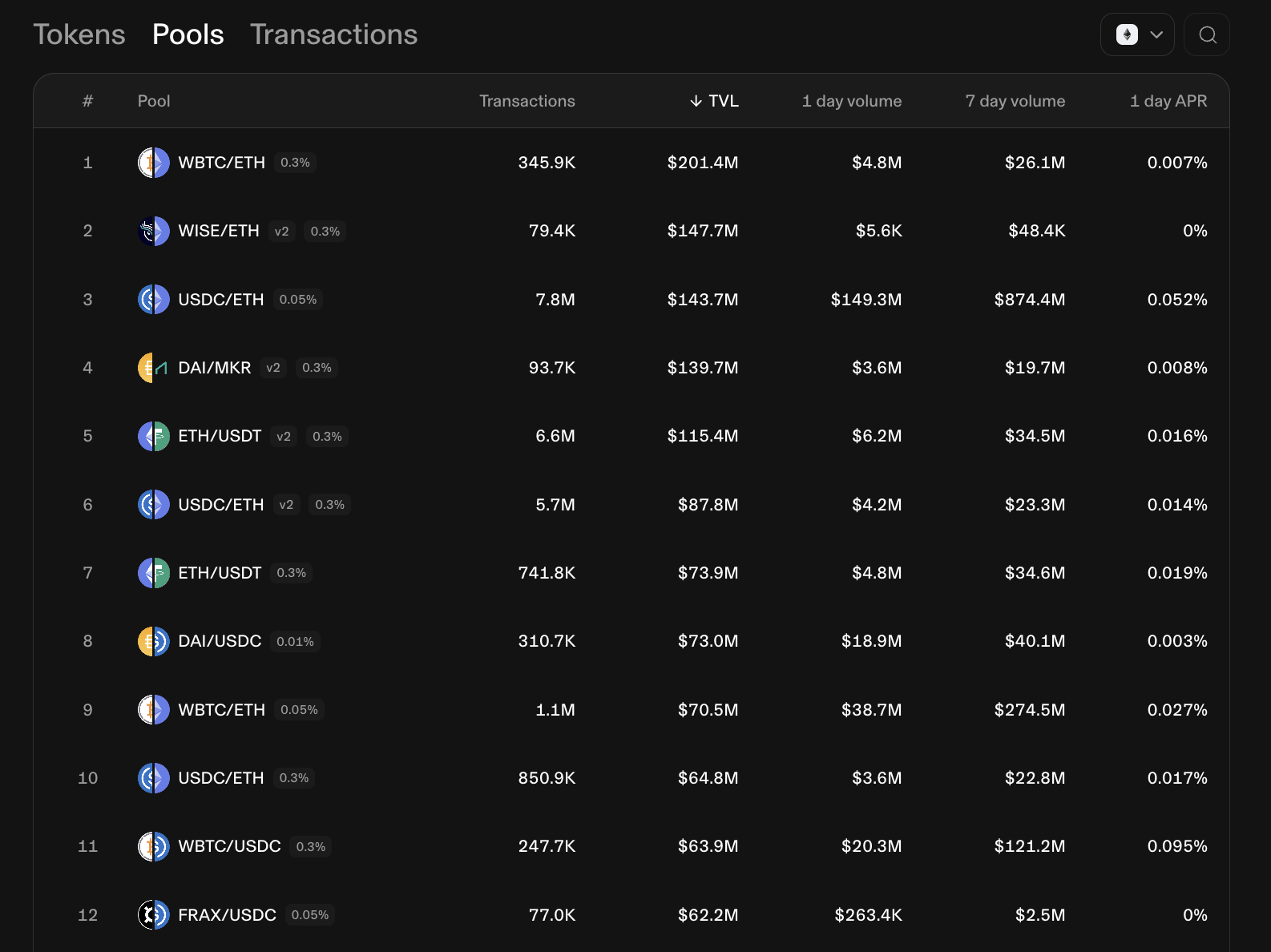
Look at all this capital on Uniswap v2 and v3 that could be migrated to Bunni v2 and be made more productive. Millions of dollars in extra yield are being missed out on.
The Ripple Effect on DeFi Protocols
But the benefits of rehypothecation go far beyond individual LPs. The protocols that receive this rehypothecated liquidity also stand to gain immensely. Here’s how:
- ◆Enhanced Liquidity for Lending Markets: When idle liquidity from pools like DAI-USDC is rehypothecated into lending markets such as Aave or Morpho, it increases the available liquidity in those markets. This influx of capital can lower borrowing costs, improve market efficiency, and attract more users to the platform, driving overall growth. If you’re a lending market, you’ll want LPs to rehypothecate their idle liquidity into your markets.
- ◆Leverage for Yield Strategies: Yield-bearing stables like Ethena’s USDE, Sky (Previously Maker) and LST/LRT providers can significantly benefit from rehypothecation. For example, Sky recently announced a collaboration with Aave. On Bunni v2, you could have a USDS - USDC pair where idle USDS is rehypothecated into sUSDS (Sky savings) and idle USDC into Aave v3 to facilitate leverage strategies that enhance the returns on sUSDS.
Note: Rehypothecation is not risk-free. LPs are subject to added smart contract risk, gas costs, and an LP may not be able to fulfill swaps if there isn’t enough reserves.
User-Friendly for Beginners, Powerful for Pros
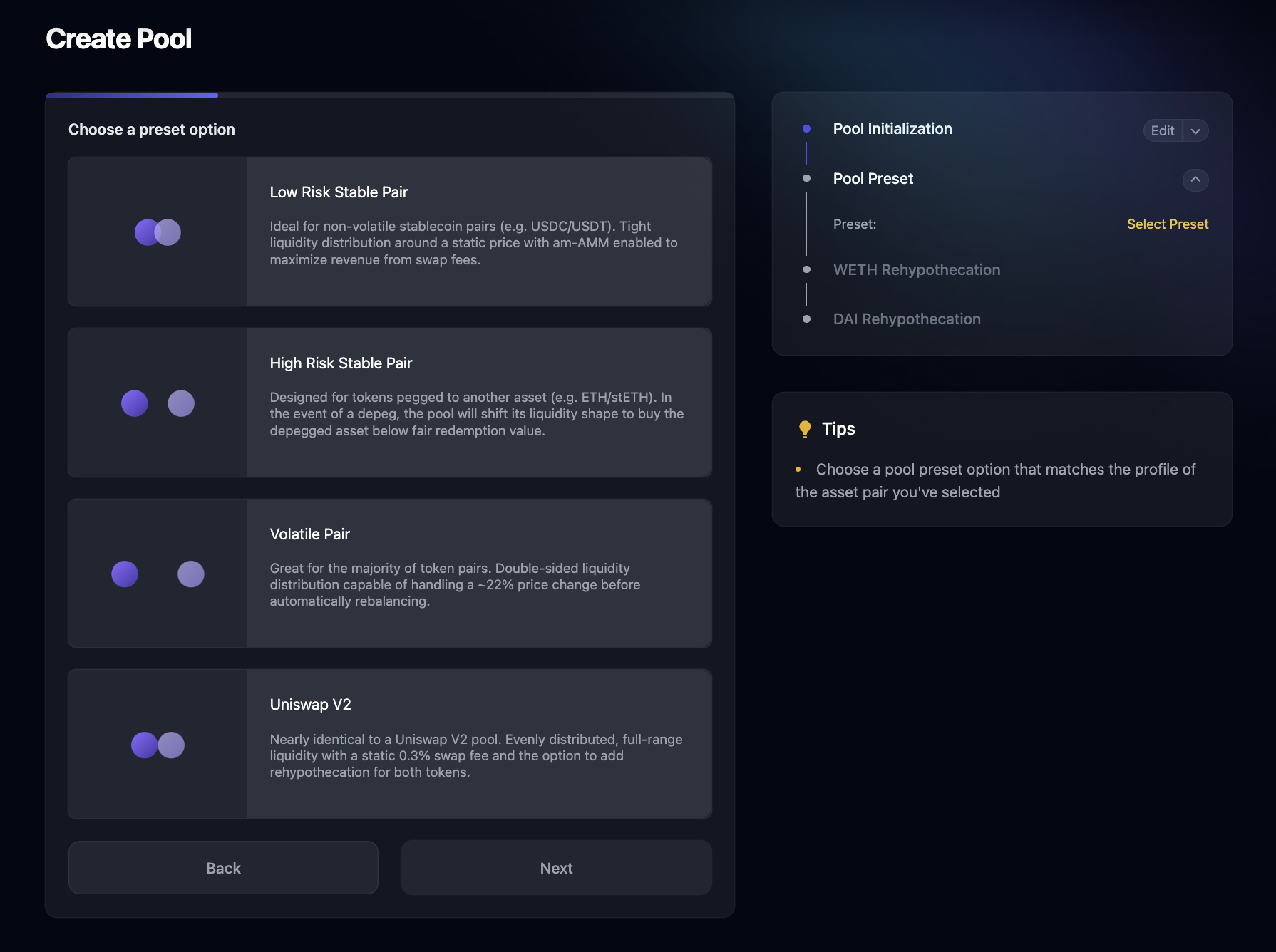
Bunni V2 offers an easy mode with presets tailored to your use case and asset type—you can set up a pool in just a minute. For those who are more technical, Bunni also offers an advanced mode for DeFi experts who want more granularity. And for the most technical users, Bunni's architecture allows them to build their own liquidity density functions from scratch, bypassing the UI entirely. You can get a feel for the pool creation process on the testnet.
Market Outlook: Bunni vs. Other DEXes
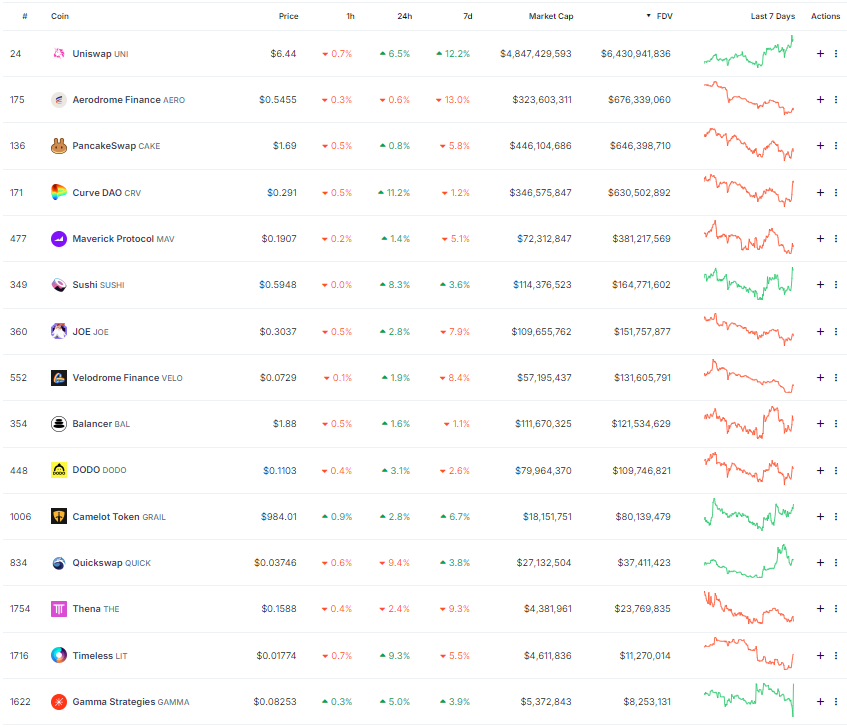
Many top DEXes offer concentrated liquidity rebalancing tools, but they are often rigid, relying on pre-configured strategies with limited customization. In contrast, Bunni V2 offers unparalleled flexibility and control. Bunni V2 can do everything these DEXes can do and so much more.
Bunni’s Governance token, $LIT
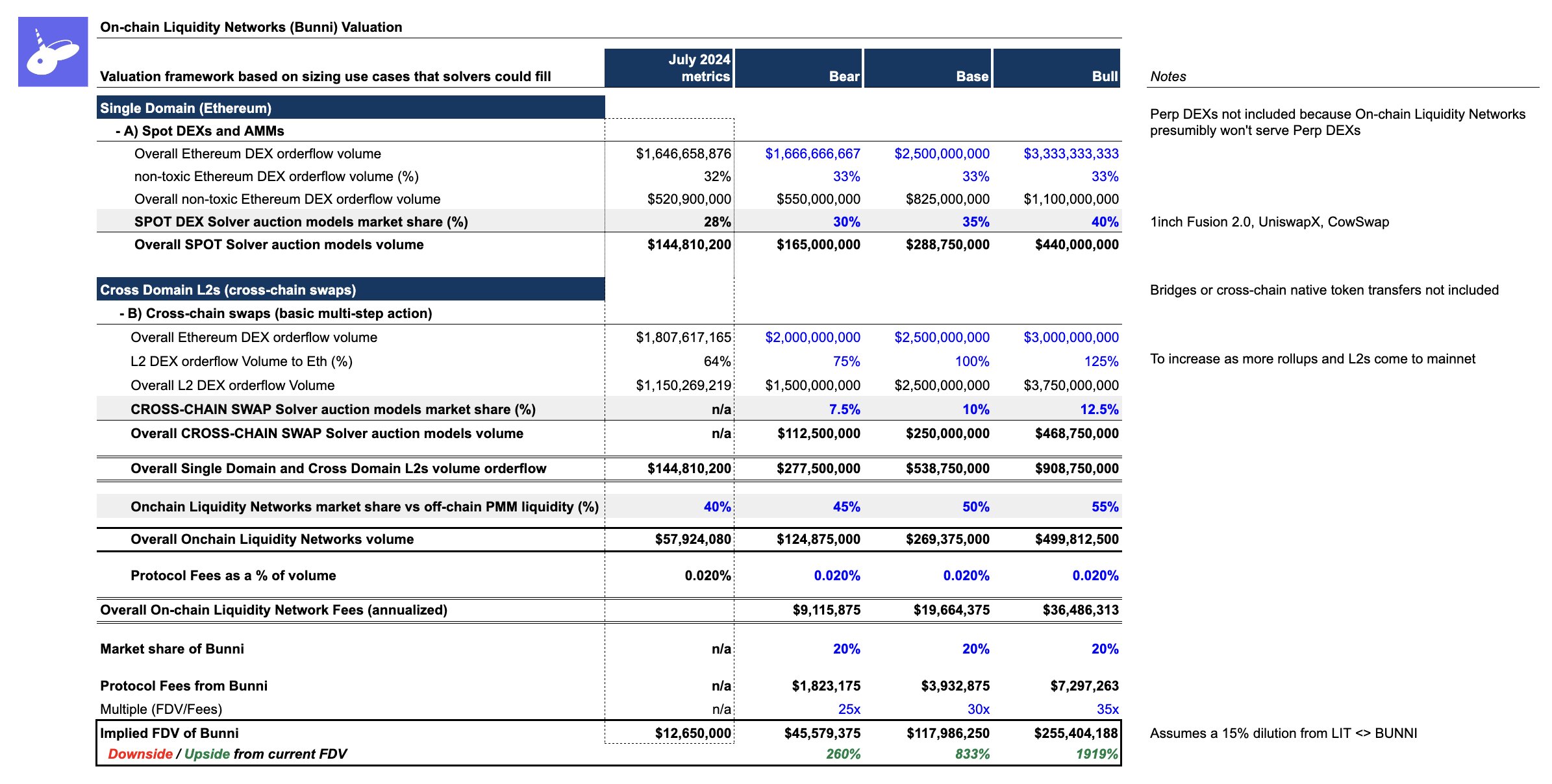
Bunni’s native governance token, $LIT (Liquidity Incentive Token), has been actively traded for over a year, initially serving as the governance token for Bunni v1. Its role in the protocol is similar to governance tokens in other decentralized exchanges where the DEX token $LIT is emitted to incentivize liquidity, can be staked to earn a % of protocol revenue, and grants governance rights to determine how liquidity is incentivized. You can read more about the $LIT tokenomics here. $LIT is currently trading at a modest $10.5 million FDV. If Bunni V2 is well received, there’s strong potential for the token to appreciate significantly for the reasons discussed earlier. The hype around Uniswap v4 nearing its launch alone could be a major catalyst for price growth. I'll be closely watching for consistent growth in TVL post-Uniswap V4 launch. If Bunni can capture market share, it has the potential to surpass some of the top competing DEXes, making 30-50x upside feasible. I’ve also included an analysis of $LIT's growth potential by @tumilett:
Value Capture:
We’re all familiar with the controversy surrounding the lack of value accrual for the UNI token and the rejection of the fee switch being turned on. However, projects building on top of Uniswap can introduce their own fee structures, which can be directed toward their respective token holders. For example, Bunni v1, built on Uniswap V3, took a 5% cut of LP swap fees and gave that to their token lockers. The Bunni docs also mention that governance can vote to raise this to 50%.
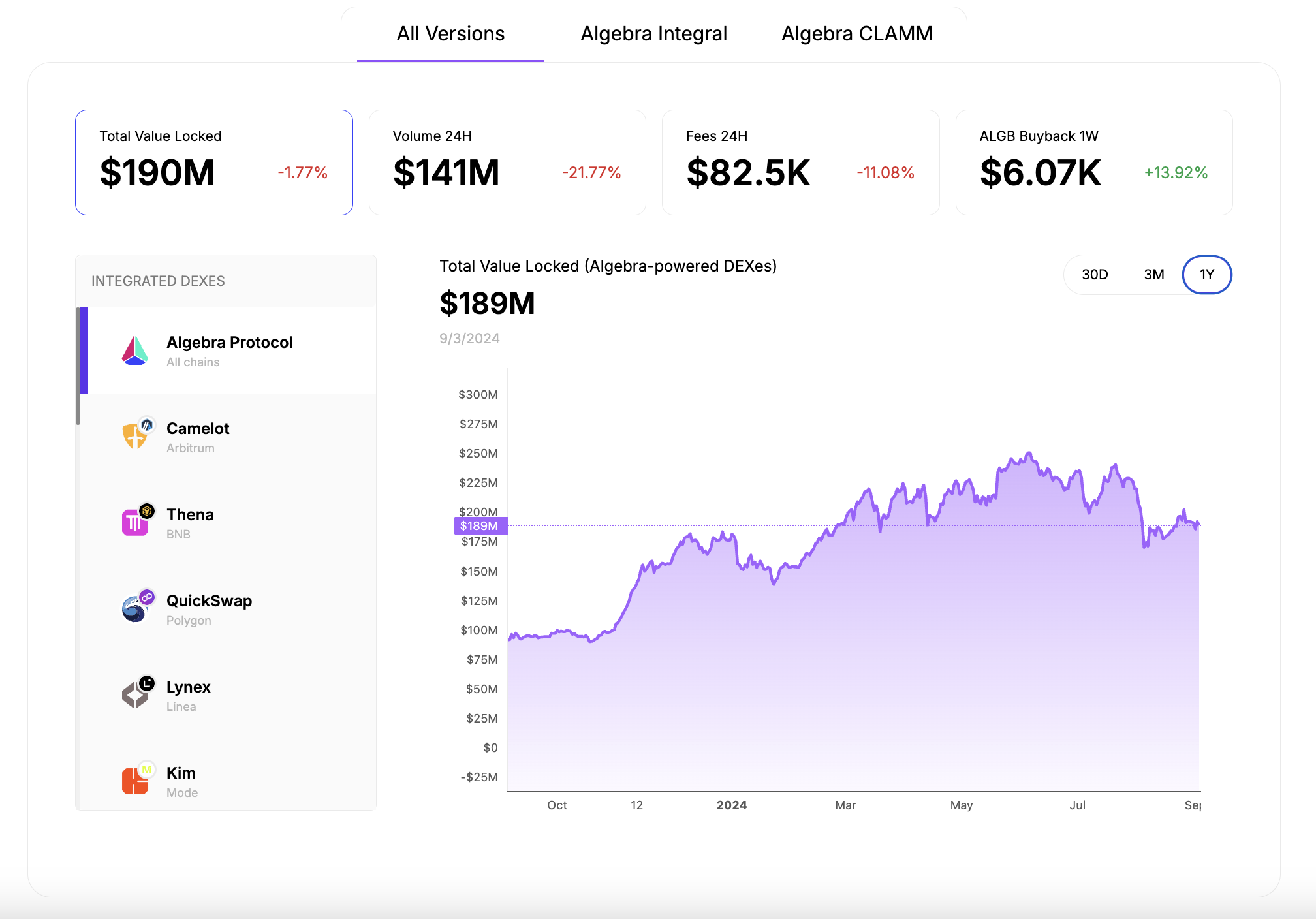
Another example is top DEXes like Camelot, Quickswap, and Thena, which all license their technology from Algebra Protocol, a competing DEX engine to Uniswap. These DEXes pay to use Algebra’s tech, with a percentage of the revenue going back to Algebra. Interestingly, all of these DEXes are trading at multiples of Algebra itself, demonstrating that projects built on foundational protocols can capture significant value and sometimes even surpass the value of the underlying protocol.
Uniswap is incentivized to Promote Protocols Like Bunni
By enabling more flexible and profitable LP strategies, Uniswap can capture additional volume through its ecosystem. Also, Uniswap can tap into Bunni's referral program, which allows referrers to earn a percentage of fees from referred LPs. Currently, Uniswap only earns from swaps made through its front end, but collaborating with Bunni could expand its revenue model beyond this, further benefiting both platforms.
Risks:
Uncertainty Around $LIT Tokenomics and Incentives
One concern is the uncertainty surrounding the role of the $LIT token in Bunni V2, particularly in terms of its use for driving incentives. While the team is rightfully focused on product development, the lack of a clear incentive plan to attract TVL, or a potential migration to a new token like "BUNNI," creates questions, especially given the locked funds in veLIT. To effectively capture TVL, Bunni V2 needs a well-defined strategy for utilizing $LIT in liquidity mining, rewards, and emissions. Without robust tokenomics and strong incentives, even the best product may struggle to attract liquidity, as incentives are often the most effective way to grow TVL in DeFi.
Multichain Expansion and Native dApp Dominance
Another challenge Bunni V2 might face is establishing itself across multiple chains. Native dApps tend to dominate DEX market share on their respective chains. For instance, Aerodrome has more TVL on Base than Uniswap, partly due to solid incentive structures. Multichain DEXes can’t easily port their token incentives across all chains where they're deployed. Since $LIT is only on Ethereum, oLIT incentives can only be distributed to pools on ETH. Additionally, it seems veLIT holders may not be able to direct oLIT emissions to v2 pools from the start, nor benefit from bribes by other protocols—both of which were significant for $LIT’s value accrual in its v1. If a token migration occurs, I would prefer an approach similar to Curvance’s multichain gauge system.
Uniswap v4 Rollout
Finally, there’s uncertainty about how Uniswap v4 will be rolled out. Will there be support for Uniswap V4 on all chains where Uniswap is currently deployed from day one? How much support will the Uniswap Foundation offer to projects building on V4, and will they provide grants?
Affiliate Disclosures
- •The author and/or others the author advises do not currently hold, or plan to initiate, an investment position in target.
- •The author does not hold an affiliated position with the target such as employment, directorship, or consultancy.
- •The author is not being compensated in any form by target in relation to this research.
- •To the best of the author's knowledge, the information provided here contains no material, non-public information. The accuracy of the information is the responsibility of the reader.