7 fig rev, 1/2 back to holders & stakers , fully unlocked $13M FDV
1. What the heck does Houdini actually do?
Two flavours of privacy:
Private
- ◆Your “from” asset is swapped → Monero on CEX #1, hops through the XMR network, lands at CEX #2, gets swapped into the “to” asset, then bridged out
- ◆Two exchanges + an L1 relay means the on-chain breadcrumb is basically scrubbed.
- ◆Typical turnaround: 20-40 min.
- ◆Typical costs between .5-1% of the notional being swapped
- ◆Sizeable OTC-style transfers where unlinkability matters.
- ◆Costs a bit more and you wait an extra coffee break.
- ◆Read more here
Semi-private
- ◆One exchange hop only;
- ◆Houdini breaks the on-chain link by using an internal CEX transfer (+ a fresh deposit address) so the public chain never sees your wallet-to-wallet hop.
- ◆Typical turnaround: 5-10 min end-to-end.
- ◆Typical cost: .25-.5% all in (50% cheaper than Private)
- ◆Routine treasury rebalancing, smaller swaps, people who just don’t want their ENS plastered on DEX-tools.
- ◆Leaves a lighter metadata shadow than full private, but still far better than vanilla swaps.
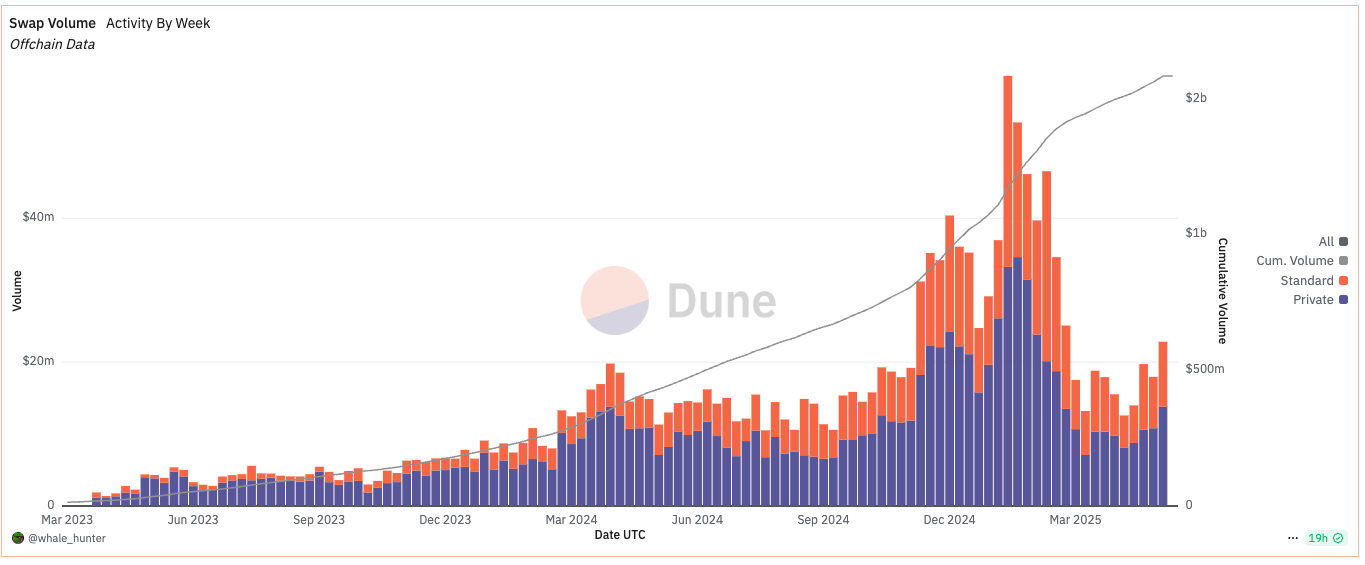
Avg Daily Volumes $3M (1000-1400 trades per day). Clear steady growth through the bear into the bull.
Max Daly Volumes $7-8M (Early Jan)
Private/Semi Private Split: 2:1
Total volumes chart from Dune
It is likely that a lot of the readers may never have used Houdini Swap so maybe surprised by the volumes. So who’s using them?
- ◆Lets start by looking at the volumes. Volume is fat tailed than an average DEX - 1% of swaps are >$35K each are roughly 45% of volume. Average size is $3K. Median is $600+. As a benchmark Uniswap will have Top 1% Swaps making up 30% volume. Average $1k. Median $200
- ◆Next lets see the timings of usage.UTC 12-18 h > 50 % of volume; this lines up with EU afternoon, US morning - same footprint that you will see on Coinbase, Binance OTC portals
- ◆Mostly majors to stables in and out per the last few snapshots
- ◆This is likely leaning more towards western trading firms rather than Asian retail
- ◆How much rev do they make? And what do they do with it?
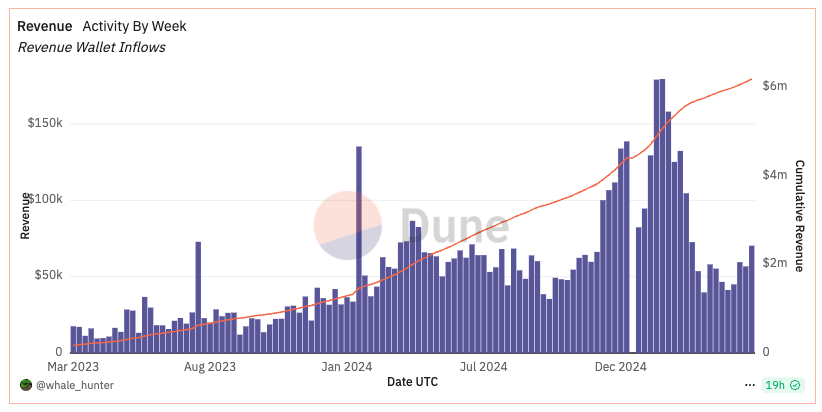
They make $8K-$10k/day these days (~25 bps on the volume). This is run rate of ~$3M annually.
That’s fine but does this flow to Token?
Glad you asked!
Since Feb 24, they initially tried to pass revenue to stakers but didn’t see a massive uptick in token demand despite doing 160%+ in APYs at one point.(This is the announcement)
Starting Feb’ 25, they are on the buyback train
- ◆40 % of the rev→ auto buy-back & burn (Buys through the the week by a bot and burn on Friday)
- ◆10 % → buy-back & stake-pool yield
- ◆50 % → runway + marketing war-chest (Before this, they were barely spending on marketing so this is a welcome change in my view)
Buy-backs create perma-bid.
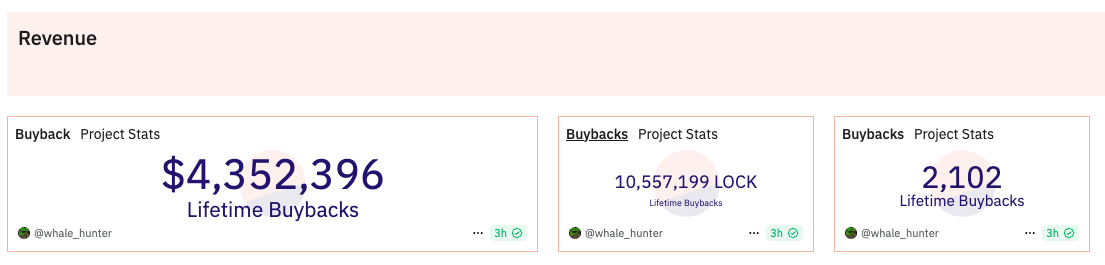
- ◆Till date, they have done $4.3M(~10.5M $Lock - 10% of the supply) worth of buybacks, which is about 70% of lifetime revenues of ~$6.2M
- ◆At a $3 m run-rate, the buyback will be $1.5M which is 13% of the supply at current prices —that’s more buy-pressure than any single LP farm can dump.
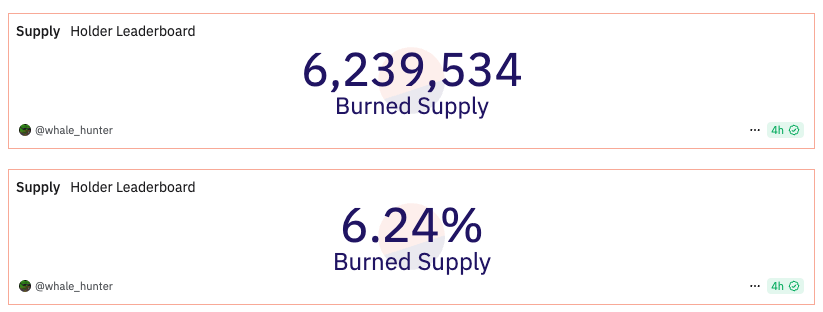
Burns delete float.
- ◆Till date, they have burnt ~6.25% of the supply
- ◆Burn will be 10%+ of total supply at current prices at $3M rev rate
- ◆Any other token sinks aside the burn?
Houdini still offers staking. 10% of the fees fund the staking pot. This is about 9% APY right now.
Staking volumes haven’t meaningfully decreased as APYs have come down with the newer focus to burn. I expect this to not increase meaningfully at current APYs
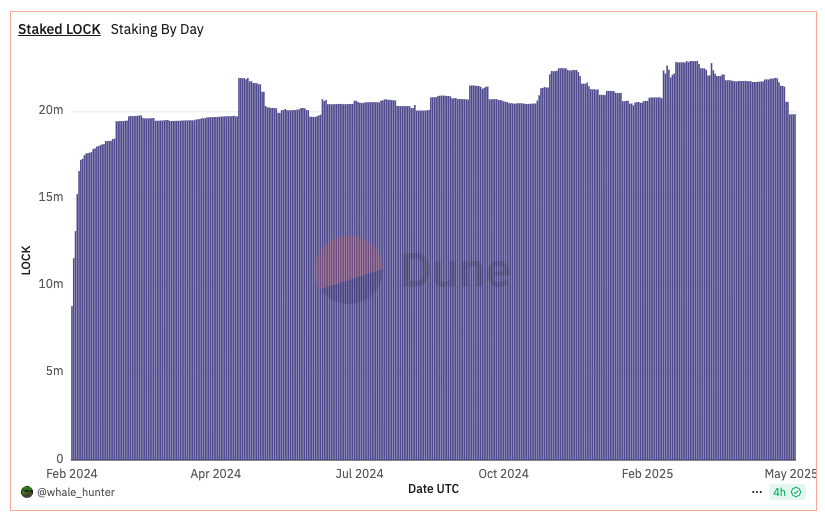
- ◆Elephant in the room- Historical Price action
- ◆Even though $Lock announced buybacks in Feb 2025, the token price has fallen 60%+ since then
- ◆In fact, since Feb 24(shortly after the listing), the price is down ~90%
- ◆This is a not a good look
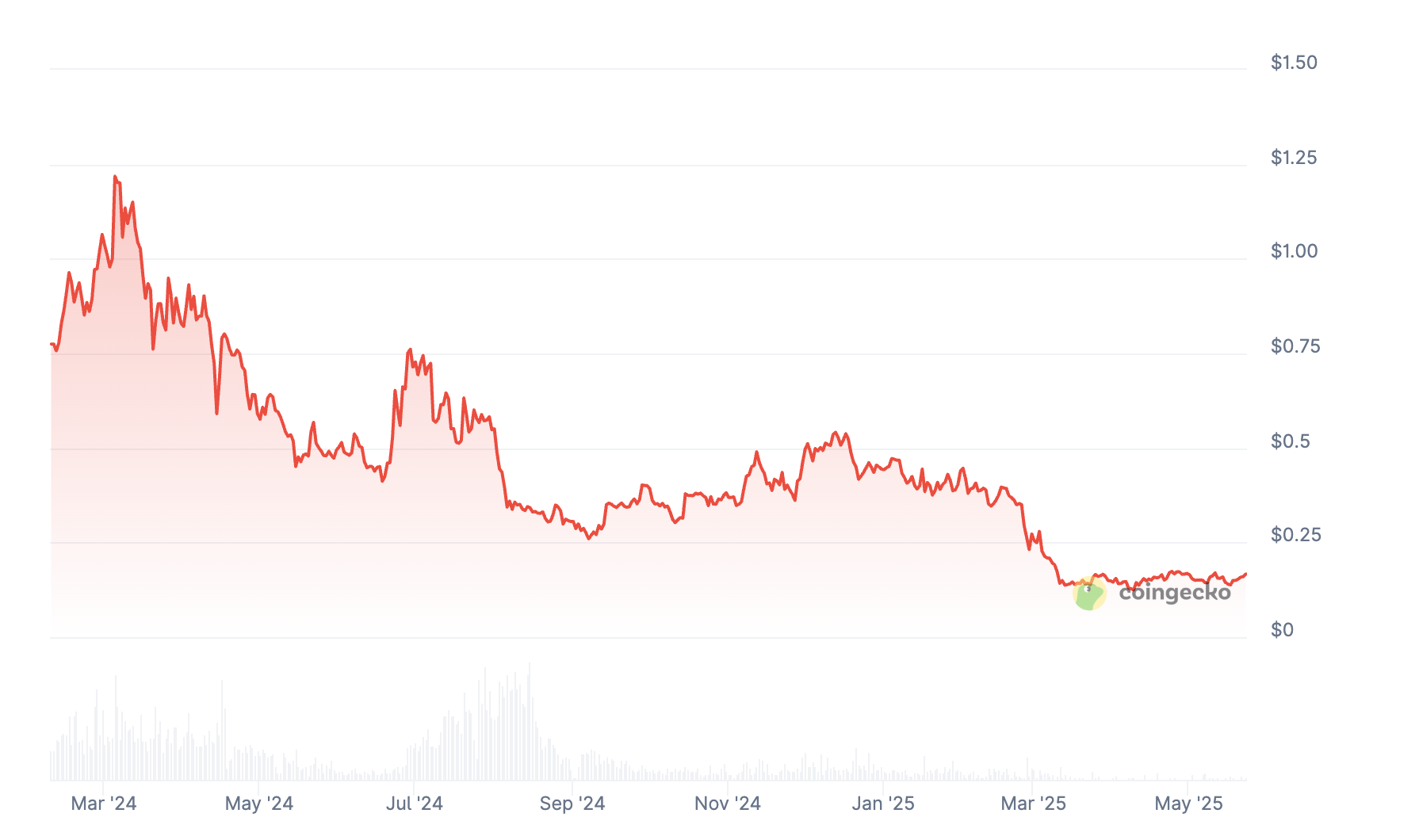
Following is my hypothesis.
- ◆Not having CEX distribution has hurt them
- ◆Even though total stake $Lock has maintained, I suppose some staked $Lock was unstaked and sold and staking yields came down
- ◆Let me know if you have any insight that I am missing.
- ◆What is the team targeting?
- ◆Even though the project started as a Privacy focused DEX, they have managed to build an efficient cross chain DEX in the process(using the CEX hops in the background which often offers not just the privacy but also more efficient routes even if it takes longer). For cross chain swaps between majors, you can often see their rates as 20bps-50bps better than the next best players
- ◆1st key ingredient to volume growth is chain expansion. They have integrated Sonic and Berachain in last few months and plan to add Sui and Tron next.
- ◆2nd key ingredient is marketing in my view. They have recently hired an experienced CMO and are starting to focus a lot more on marketing - affiliates, partnerships, paid ads, SEO , KOLs etc. )They had hardly spent any money on marketing until earlier this year. In line with that, the velocity of trading competitions has gone up recently . That said, the marketing campaigns are early and the impact on the volumes in unclear(if at all) right now but as I listened to the weekly calls, I came away thinking that they are focusing on the right things.
- ◆They are targeting integrating routes from some of the best DEXs in the space and that should certainly help them with rates they quote. They have integrated Uniswap and Jupiter routes recently. Next up is PancakeSwap on BSC.
- ◆In terms of numbers, the team did mention $1B weekly volumes as a target(that would be 40-50x from current numbers). I don’t expect them to get there this year. My best case scenario is that volumes 10x in next 1 year. If that happens they would be in $250M-$300M weekly volumes.(And $35-$40M annual revenue run rate)
- ◆Risks and watchouts
- ◆Execution – volumes flatten and revenue drops → less buy-back juice. Would love to see what increase in marketing spends since Feb 25 is accomplishing.
- ◆CEX dependency – private route relies on partner exchanges staying privacy-friendly
- ◆Stake yield sell-pressure – big stakers can farm-and-dump, though burn bot offsets a chunk and staking yields are compressed. 1:4 ratio between yield and buyback.
- ◆Reg narrative – if regulators lump privacy swaps with mixers, Houdini will need its compliance paperwork in order.
- ◆Why I am starting to buy $LOCK?
- ◆Sub $15M FDV
- ◆Fully Liquid
- ◆Bottom 20 percentile on Revenue/FDV
- ◆Clear token buyback program(~2% of the supply will be removed every quarter)
- ◆Steady growth in usage
- ◆Unique product in the market
Personal plan: accumulate beneath 20 m FDV, target 12-18 month hold. Starting with a 2-3 % allocation, ready to double if weekly revenue keeps printing higher highs.
Affiliate Disclosures
- •The author and/or others the author advises do not currently hold, or plan to initiate, an investment position in target.
- •The author does not hold an affiliated position with the target such as employment, directorship, or consultancy.
- •The author is not being compensated in any form by target in relation to this research.
- •To the best of the author's knowledge, the information provided here contains no material, non-public information. The accuracy of the information is the responsibility of the reader.