Loading podcasts…
Language
CNBC Halftime Report with Brad Gerstner - October 15th, 2026
Gerstner is tactically cautious after AI stocks’ April–May surge, but more bullish on 2027–28 as model capability drives revenue and recursive development creates “Claude Code moments.”Anthropic’s Q3 revenue of just under $17 billion, up 45% sequentially, supports his expectation of an IPO in “weeks, not months” with demand above $500 billion.CoreWeave debt and AI-safety framework remain key tests.
Jensen Huang | Does AI Revenue Justify Capex, '27 AI Bottlenecks, Singularity, Open vs Closed & more
Jensen HuangBrad GerstnerClark Tang
Jensen Huang argues AI demand can compound as reasoning consumes more inference and agents take on more work, even as intelligence gets cheaper.Physical AI generated $10 billion for Nvidia in the first six months of the year, while infrastructure constraints may delay capacity.Broader demand and software licensing support the capex case, but deployment timing remains a risk.
20VC: Valar’s Pro-Rata Fight, Meta’s Muse and NVIDIA’s Bet
Pro rata rights emerge as economically valuable options, while Meta’s Muse Wonder signals a return to the model frontier despite unresolved usability questions.Meanwhile, rumored NVIDIA-Reflection and Jev’s $870 million Series A at a $7.5 billion valuation hinge on strategic control, hyper-accurate classification, and whether AI demand can absorb steep inference-price cuts.

184: 与陈哲的「具身季报26Q3」:Astra冲击后,通用模型会吃掉Robotics吗?
Astra可直接输出末端位姿,再经逆动力学转成电机信号;银河通用10项Robot Dojo任务中,监督π0.5将成功率从26%升至48%。这动摇了“physical AI大于digital AI”的估值前提,但VLA仍可能有位置;Astra目前仍慢且成功率偏低,尚不能真实部署。
Thrive Capital’s Dr. Nworah Ayogu on Why Neuralink Is More Interesting Than SpaceX
Thrive’s healthcare thesis is that AI may shift bottlenecks from molecule generation to validation, trials, manufacturing, and commercialization.Cadence cites 25% fewer hospitalizations, over-80% more controlled-blood-pressure patients, nearly one-point lower A1C, and $2.5 million in weekly Medicare savings across 100,000+ monitored patients.Neuralink and OpenAI show upside, while clinical processes and manufacturing capacity remain unresolved constraints.
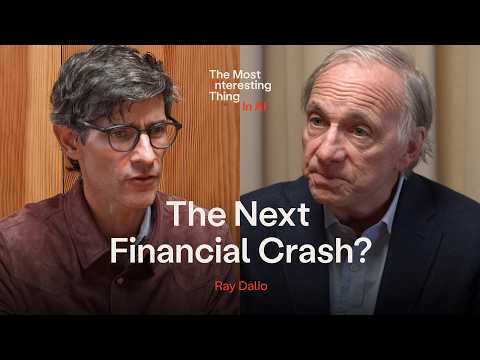
Why Ray Dalio is Worried About an AI Bubble
Ray Dalio argues that transformative AI can be a poor investment when paper wealth outruns cash, with current bubble conditions at the same magnitude as 2000 and 1929.The unresolved risk is fiscal: Washington’s debt and refinancing burden may demand liquidity before AI productivity becomes taxable income, while China’s cheaper infrastructure-style deployment across 32% of global industrial production could create a different competitive advantage.
Squawk Pod: Paul Tudor Jones’ call for 2027 & vibes - 10/13/26 | Audio Only
Paul Tudor JonesAdam GrantJoe KernenBecky QuickAndrew Ross SorkinKatie Kramer
Paul Tudor Jones sees a 1999-like, two-speed market: short-term weakness could give way to year-end strength, but 2027 may be “really, really challenging.”Jones bases the warning on IPOs, secondaries and unlocks—including SpaceX, Anthropic and OpenAI—reversing equity flows, while AI issuance and sovereign borrowing pressure debt markets; he sees 60/40 odds of a forced fiscal resolution.

David Vélez - Building Nubank and the Future of Global Banking - [Invest Like the Best, EP.495]
Patrick O'ShaughnessyDavid Vélez
Vélez sees fintech disruption in its first inning: roughly 90% of the $10 trillion consumer-finance market still runs through branches.Nubank serves 140 million customers with 10,000 employees, at about 3% of traditional incumbents' cost to serve.Its US launch and stablecoin-backed accounts in upwards of 35 countries test whether that efficiency can travel, with organic brand-building the key hurdle.
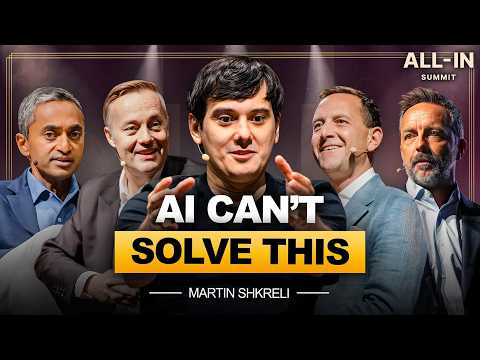
Martin Shkreli: Big Pharma's Blind Spot, Betting Against Quantum & What Prison Taught Him
Shkreli limits quantum’s edge to factoring and elliptic-curve logarithms; current machines lack quantum RAM.He calls industry spending speculative and expects analog optical computing to challenge Nvidia’s H100, B100, and B200 within 20 years.His pharmaceutical thesis favors mispriced discarded molecules; he calls AI drug discovery within five years “nonsense” and expects no AI-related drug in the next 10 years.

It's not AI Doom, It's a Fourth Turning
Michael Arrington frames AI panic, sovereign debt, geopolitical tension, and institutional decay as overlapping Fourth Turning symptoms, not one clean “doom” event.He argues US labs cannot slow AI development while China may continue racing; Bitcoin could hedge institutional risk and become autonomous AI’s native transaction layer, while founder psychology and capitulation inform bear-market entry.